


China Top Cheap Bearing Suppliers for Global Buyers
China has become a major sourcing base for global bearing buyers. Its manufacturing network covers automotive, agricultural, electric-motor, conveyor, and industrial applications. The opportunity is clear, but low price alone does not prove value.
Grand View Research estimates that the global bearing market reached approximately US$132.6 billion in 2023. The firm also projects continued growth through 2030, driven by vehicles, automation, renewable energy, and industrial equipment. These figures explain why Cheap Bearing searches continue attracting distributors and maintenance teams. However, market size does not guarantee consistent quality. A bearing may look perfect in a product photograph, yet fail early because of poor heat treatment, inaccurate clearance, or weak sealing.
Chris Johnson, Managing Director of SMB Bearings, gives buyers a practical warning: “The cheapest bearing is rarely the lowest-cost bearing.” His point matters during supplier comparisons. A low-priced 6204 bearing can become expensive after vibration, downtime, replacement labor, and damaged shafts appear. Experienced buyers therefore check ISO 9001 certification, material specifications, load ratings, grease details, inspection records, and sample performance. They also compare tolerances instead of relying on brand claims.
This guide examines China’s leading Cheap Bearing suppliers for global buyers. It focuses on factory capability, export experience, product range, quality controls, and communication reliability. Some supplier information can change. That limitation deserves attention. Buyers should verify current certificates, test reports, and production capacity before placing large orders. A careful shortlist is not glamorous, but it often prevents the most expensive mistake.
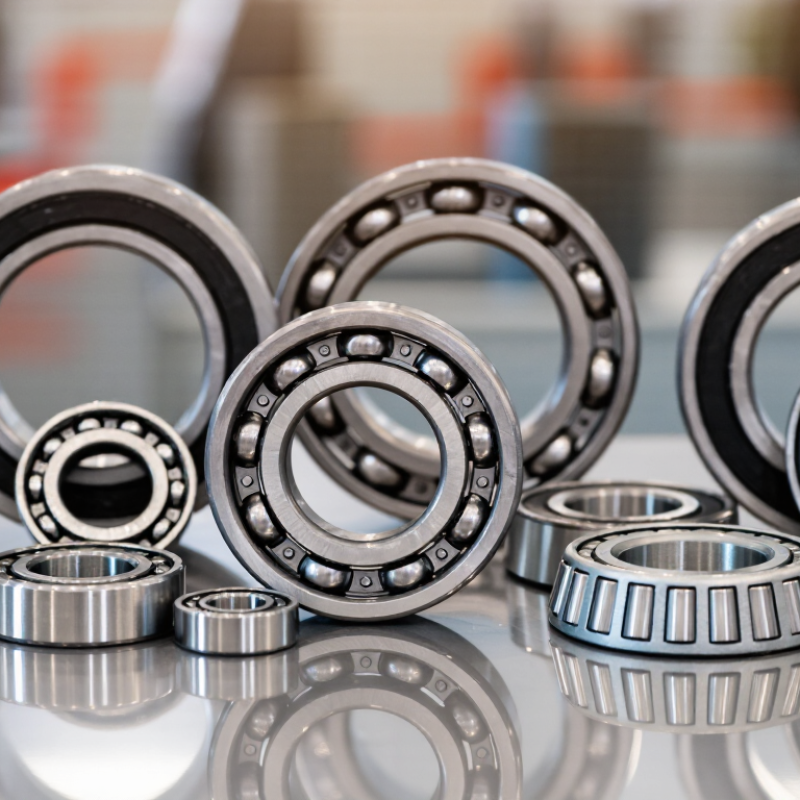
Understanding China’s Cheap Bearing Supplier Market
China Top Cheap Bearing Suppliers for Global Buyers
Understanding China’s Cheap Bearing Supplier Market
China’s low-cost bearing market serves machinery makers, repair businesses, and international distributors. Prices vary widely, even for bearings with identical dimensions. The difference often comes from steel quality, heat treatment, seals, and inspection depth.
Experienced buyers request clear technical documents before discussing large orders. These should include material specifications, hardness ranges, tolerance classes, load ratings, and test records. A reliable supplier can explain production steps without vague promises. Factory audits can also reveal practical details, such as storage humidity, packaging methods, and gauge calibration.
Cheap does not always mean poor. It can reflect efficient production, large capacity, or simplified packaging. However, an unusually low quote may exclude inspection, export packing, or replacement support. That matters.
Sample testing should match real working conditions. Check noise, rotation smoothness, temperature rise, and dimensional accuracy. Keep written records for every batch. Traceability is often overlooked by new buyers. I have seen purchasing teams focus on unit price while ignoring inconsistent grease filling and damaged inner rings.
Some suppliers communicate well before payment, then respond slowly after shipment. This is a warning sign, but not proof of failure. Use staged orders, independent inspection, and clearly written acceptance standards. Even careful sourcing has uncertainty. Product claims deserve verification.
China Top Cheap Bearing Suppliers for Global Buyers - Understanding China’s Cheap Bearing Supplier Market
| Bearing Category | Typical Product Range | Common Material | Typical Applications | Cost Position in China’s Export Market | Important Buyer Checks |
|---|---|---|---|---|---|
| Deep-Groove Ball Bearings | Open, shielded, or sealed configurations; metric sizes commonly manufactured to ISO boundary-dimension practices | Hardened bearing steel, commonly equivalent to 100Cr6 / AISI 52100 grade | Electric motors, pumps, fans, conveyors, agricultural machinery, and general machinery | Low to medium | Radial and axial clearance, seal material, grease specification, noise level, vibration grade, and dimensional tolerance |
| Tapered Roller Bearings | Single-row and matched assemblies for combined radial and axial loads | Hardened alloy bearing steel with precision-ground raceways and rollers | Vehicle wheel hubs, gearboxes, axles, construction equipment, and industrial reducers | Medium | Cup-and-cone matching, preload or endplay, roller profile, heat treatment, and traceability of steel material |
| Spherical Roller Bearings | Self-aligning designs with cylindrical or tapered bore options | Hardened bearing steel; cages may be steel, brass, or engineered polymer depending on specification | Mining equipment, paper machinery, conveyors, crushers, fans, and heavy industrial drives | Medium to high | Permissible misalignment, internal clearance, load rating, cage design, lubrication method, and housing fit |
| Needle Roller Bearings | Drawn-cup, machined-ring, and needle-roller assemblies with a small radial section height | Hardened steel rollers and raceways; cage material varies by design | Automotive transmissions, pumps, compact gear systems, printing equipment, and linkages | Low to medium | Shaft hardness, raceway surface finish, radial clearance, lubrication access, and allowable operating speed |
| Pillow-Block and Insert Bearings | Mounted units with set-screw, eccentric-locking, or adapter-sleeve attachment methods | Bearing steel insert with cast iron, pressed steel, stainless steel, or thermoplastic housing | Conveyors, food-processing machinery, agricultural systems, packaging lines, and material handling | Low | Housing alignment, shaft locking method, corrosion resistance, relubrication provision, and mounting-hole accuracy |
| Stainless-Steel Bearings | Commonly supplied as sealed or shielded miniature, small, and standard-size bearings | Corrosion-resistant stainless bearing steel; seal and cage materials depend on temperature and chemical exposure | Food equipment, laboratory devices, marine environments, clean areas, and light chemical exposure | Medium to high | Steel grade, corrosion test requirements, washdown compatibility, lubricant approval, and temperature range |
| Miniature and Instrument Bearings | Small-bore radial bearings for compact assemblies and low-load, high-speed mechanisms | Hardened bearing steel, stainless steel, or ceramic-hybrid construction for specialized applications | Small motors, encoders, medical instruments, model mechanisms, and precision assemblies | Medium to high | Low-noise performance, radial play, rotational torque, cleanliness, grease quantity, and dimensional consistency |
| China Sourcing Cluster: Zhejiang | Large concentration of standardized radial bearings, mounted units, agricultural bearings, and replacement-market products | Carbon and alloy bearing steels; product specifications vary by factory and production line | General industrial replacement, agricultural machinery, conveyors, motors, and trading distribution | Generally competitive | Factory audit, sample consistency, production equipment, inspection records, packaging control, and export documentation |
| China Sourcing Cluster: Jiangsu and Shandong | Industrial, automotive, heavy-duty, and customized bearing programs with varying production scales | Hardened bearing steel and customized cage, seal, heat-treatment, and surface-finish options | Automotive components, steel equipment, gearboxes, machinery, energy equipment, and heavy industry | Competitive to specialized | Load-rating calculations, heat-treatment records, metallurgical certificates, inspection equipment, and process capability |
| Recommended Quality Documentation | Technical drawing, product specification, inspection report, packing list, commercial invoice, and certificate of origin where required | Material certificates should identify steel grade, heat number, and applicable heat-treatment information | Pre-shipment verification, incoming inspection, supplier qualification, and repeat-order control | Essential for low-cost sourcing | Confirm compliance with the agreed drawing, ISO 15 boundary dimensions, ISO 492 tolerance class, and ISO 2859-1 sampling plan where applicable |
Related Posts
-
Top 10 China Bearing Factory Suppliers for Global Buyers?
-
2026 How to Choose the Right Large Bearing for Your Needs?
-
Why Do Cheap Bearings Cost Less Worldwide?
-
2026 Best Roller Bearing Types for Enhanced Performance and Durability?
-
Linqing Bearing Buying Tips for Global Buyers 2026?
-

Top China Best Industrial Bearings for Global Buyers?
-

Phone
-

E-mail
-

Whatsapp
-

Wechat
Wechat
