10 Tips for Choosing the Right China Bearing Supplier

Choosing a China Bearing supplier is not simply a price comparison. It is a decision about steel quality, heat treatment, traceability, and long-term machine performance. A low quotation may hide inconsistent tolerances, weak packaging, or incomplete test records. Details matter.

Industry reports from the China Bearing Industry Association and Fortune Business Insights show China’s continuing importance in global bearing manufacturing. Their data also reveal a competitive market with wide differences in product quality, export capability, and technical specialization. Buyers should therefore examine more than catalogs. Factory audits, sample testing, material certificates, production capacity, and after-sales response deserve equal attention. As bearing authority Tedric A. Harris wrote, “A bearing must be selected for the application, not merely for the load.” That principle remains practical when evaluating a China Bearing partner.

The following ten tips focus on evidence rather than promises. Check whether the supplier can provide ISO 9001 records, dimensional inspection reports, fatigue-test results, and batch-level traceability. Ask where the steel comes from. Confirm whether seals, cages, lubricants, and clearance grades match your operating conditions. A supplier may claim precision. Your audit should verify it. Even experienced buyers can overlook packaging moisture, counterfeit certificates, or unclear warranty terms. That is the uncomfortable part. Supplier selection is never perfect. However, disciplined questions can reduce costly surprises and build a more reliable sourcing relationship.

10 Tips for Choosing the Right China Bearing Supplier

Supplier Qualification and Industry Experience

Choosing the Right China Bearing Supplier: Supplier Qualification and Industry Experience

Supplier qualification should begin with evidence, not attractive prices. Request business licenses, quality certificates, inspection procedures, and recent production records. Check whether the documents match the actual factory address and product scope. A polished certificate is not proof of consistent bearing quality.

Industry experience matters because applications fail in different ways. A supplier serving electric motors should understand vibration, noise, insulation, and heat. A supplier for conveyors should discuss load cycles, contamination, sealing, and lubrication. Ask for anonymized case details, including the bearing type, operating speed, service conditions, and corrective actions. Practical answers reveal more than general sales language.

Visit the facility when possible. Watch how workers handle components, measure tolerances, and protect finished bearings from dust. Ask to see incoming material checks and final inspection records. Traceability should connect a bearing to its batch, inspection data, and packing date. Request sample testing from an independent laboratory when the application is critical.

Do not rely on one successful sample. Production consistency is harder. I once treated a clean sample as sufficient evidence, but later overlooked process control. That mistake changed my evaluation method. Now I compare several batches, check communication during technical questions, and review how the supplier handles complaints. Reliable partners explain problems clearly, even when their answer is uncomfortable.

Product Quality, Standards, and Certification Review

Choosing the right China bearing supplier requires more than comparing prices. Product quality begins with steel cleanliness, heat treatment, and precise grinding. Ask for material certificates, hardness results, and dimensional inspection reports for each production batch. On arrival, inspect raceways under bright light. Scratches, discoloration, or uneven edges deserve immediate attention.

Standards provide a useful framework, but certificates need careful review. Confirm whether the supplier follows ISO 492 for bearing tolerances and ISO 281 for basic rating life calculations. Check the certification scope, issuing organization, expiration date, and covered factory location. A certificate without traceable batch records proves little. Request sample reports that connect the bearing number, production date, and inspection equipment.

Do not rely on paperwork alone. Request samples and measure bore diameter, radial clearance, noise, and rotation smoothness under controlled conditions. Ask how nonconforming products are isolated and corrected. I once treated a clean certificate as sufficient evidence, and that judgment was too optimistic. A supplier may pass an audit yet struggle with consistent output during peak orders. Review recent inspection data, factory process controls, and customer-specific testing experience. Leave room for doubt. Reliable sourcing comes from repeated evidence, not one impressive document.

10 Tips for Choosing the Right China Bearing Supplier - Product Quality, Standards, and Certification Review

No. Evaluation Dimension What to Verify Relevant Standard or Technical Reference Recommended Acceptance Benchmark Suggested Score
1 Quality Management System Confirm that the supplier operates a documented quality management system covering incoming materials, process control, final inspection, nonconforming product control, corrective action, and traceability. ISO 9001
Request the certificate scope, validity period, issuing body, audit status, and site address.
A current certificate should cover the actual manufacturing site and the relevant bearing design, production, or distribution activities. Verify the certificate through the issuing body or certification database where available. 0–5 points
2 Dimensional Accuracy Review inspection records for bore diameter, outside diameter, width, chamfer dimensions, radial internal clearance, and runout according to the bearing type and tolerance class. ISO 492
For metric radial rolling bearings, verify the stated tolerance class and measurement method.
The purchase specification should define the required tolerance class. Inspection records should show actual measured values, equipment identification, date, and lot or batch traceability. 0–5 points
3 Load Rating and Service Life Check whether the supplier provides basic dynamic load rating, basic static load rating, equivalent load calculations, and estimated rating life for the intended operating conditions. ISO 281 ISO 76
ISO 281 addresses dynamic load ratings and rating life; ISO 76 addresses static load ratings.
The selected bearing should meet the application’s calculated dynamic and static safety requirements. Calculations should identify load, speed, duty cycle, lubrication, temperature, and required service life. 0–5 points
4 Material and Heat Treatment Verify steel grade, material certificates, chemical composition, hardness, microstructure, heat-treatment process controls, and lot traceability for rings and rolling elements. ISO 683-17
Use the applicable bearing-steel material specification and agreed customer drawing requirements.
Each production lot should be traceable to material certificates and heat-treatment records. Test results should match the agreed material grade, hardness range, cleanliness requirements, and microstructural criteria. 0–5 points
5 Surface Finish and Cleanliness Assess raceway and rolling-element surface finish, grinding marks, contamination control, washing effectiveness, preservation oil, and packaging cleanliness. ISO 15243
Use the standard failure-damage terminology when reviewing defects such as wear, fatigue, corrosion, or electrical erosion.
Samples should be free from visible rust, dents, cracks, contamination, abnormal grinding burns, and handling damage. The supplier should maintain documented washing, inspection, and preservation procedures. 0–5 points
6 Functional and Performance Testing Review testing capability for noise or vibration, torque, rotational smoothness, temperature rise, sealing performance, and abnormal sound, according to the product application. Customer Specification ISO 15243
Test methods should be documented, repeatable, and linked to acceptance limits.
The supplier should provide a control plan defining test frequency, sample size, equipment, acceptance limits, reaction plan, and records for every production lot or agreed inspection interval. 0–5 points
7 Calibration and Measurement Reliability Check calibration status for dimensional gauges, roundness equipment, hardness testers, vibration instruments, temperature sensors, and test rigs. ISO/IEC 17025
Calibration certificates should identify the instrument, calibration date, due date, measurement uncertainty, and traceability route.
Critical measuring equipment should be within its calibration period and suitable for the required measurement tolerance. Out-of-calibration equipment should trigger documented impact assessment and corrective action. 0–5 points
8 Certification and Audit Evidence Review management-system certificates, audit reports, nonconformity closure records, customer complaint trends, corrective actions, and internal quality objectives. ISO 9001 ISO 14001 ISO 45001
Management-system certificates should be issued under an appropriate conformity-assessment process.
Give priority to suppliers that provide verifiable certificates, transparent audit findings, evidence of timely corrective action, and consistent performance data rather than certificates alone. 0–5 points
9 Traceability and Documentation Confirm that each shipment can be traced from finished bearing to production date, machine or line, material lot, inspection results, operator or process record, and packaging label. ISO 9001
Apply the customer’s documentation, labeling, retention, and change-control requirements.
The supplier should provide consistent part numbers, revision control, certificates of conformity, inspection reports, packing lists, and batch codes that match the physical packaging and shipping documents. 0–5 points
10 Sample Approval and Ongoing Monitoring Use pre-production samples, first-article inspection, dimensional reports, functional tests, packaging checks, and defined supplier-performance reviews before volume purchasing. Quality Agreement Control Plan
Define change notification, nonconforming product handling, warranty response, and periodic requalification requirements.
Approve production only after samples meet the drawing and application requirements. Monitor defect rate, on-time delivery, complaint response time, corrective-action closure, and lot acceptance results. 0–5 points
Scoring guide: 5 = fully verified with objective evidence; 4 = minor gaps with acceptable controls; 3 = partially verified; 2 = significant documentation or process gaps; 1 = weak or inconsistent evidence; 0 = requirement not demonstrated. A suggested minimum for shortlisting is 35 out of 50 points, subject to application-specific safety and performance requirements.

Manufacturing Capacity and Technical Support

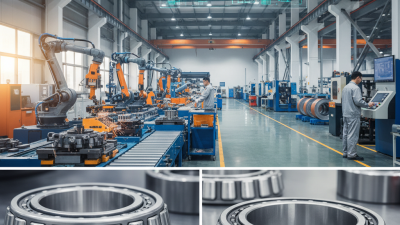
Manufacturing capacity is more than a supplier’s annual output claim. During factory audits, inspect forging lines, heat-treatment furnaces, grinding machines, and final inspection stations. Ask for monthly production records, not impressive brochures. The U.S. Department of Energy reports that motor-driven systems consume more than half of industrial electricity in many facilities. Bearing quality therefore affects both equipment reliability and energy performance. A capable China bearing supplier should explain how roundness, hardness, surface roughness, and internal clearance are controlled. Request sample inspection records and batch traceability. Small details matter.

Technical support should continue after shipment. Engineers should review load, speed, temperature, lubrication, contamination, and shaft alignment before recommending a bearing. ISO 281 provides the basis for bearing rating-life calculations, while ISO 15243 supports failure-mode analysis. Ask whether the supplier can provide calculation sheets, installation guidance, and failure reports with photographs. Response time matters too. A practical benchmark is a clear technical reply within one working day, although complex failures need deeper testing. No supplier gets every application right. That is why trial orders, field feedback, and corrective-action records deserve more attention than the lowest quotation. A factory may have capacity, but without engineering support, capacity can become expensive inventory.

10 Tips for Choosing the Right China Bearing Supplier: Manufacturing Capacity and Technical Support

Recommended evaluation weights for supplier selection. Manufacturing capacity and technical support receive the highest priority because they directly affect supply continuity, product reliability, and application performance.

The percentages represent a practical procurement scoring framework with a total evaluation weight of 100%. Buyers should validate each area through factory audits, production records, quality documents, engineering interviews, and sample testing.

Pricing, Communication, and Delivery Assessment

10 Tips for Choosing the Right China Bearing Supplier

Pricing, Communication, and Delivery Assessment

A low bearing price can hide costly gaps. Compare material grade, tolerance, lubrication, packaging, minimum order quantity, and payment terms. Request a clear quotation with tooling, inspection, and transport costs listed separately. Cheap quotes mislead. My purchasing experience shows that total landed cost matters more than the unit price. Ask whether the supplier can maintain stable quality across repeated orders, not only provide an attractive sample.

Communication reveals technical maturity. Send drawings with load requirements, operating speed, noise limits, and application conditions. A capable supplier should confirm unclear details instead of guessing. Measure response times during normal discussions. Silence costs money. Keep written records of revisions, approved samples, and corrective actions. If an engineer joins the conversation, ask practical questions about clearance, heat treatment, sealing, and failure analysis. I have sometimes trusted confident answers too quickly, so independent verification remains necessary.

Delivery assessment requires more than a promised date. Review production capacity, raw material availability, inspection stages, packaging protection, and shipment tracking. Request a realistic schedule with approval, production, inspection, and dispatch milestones. Delays happen. A dependable supplier explains risks early and offers workable alternatives. Consider a pre-shipment inspection for important orders, especially when tolerances are tight. Check previous delivery records where possible. One missed shipment may damage your production plan more than a modest price difference. Dated evidence is stronger than polite assurances.

Sample Testing, Contracts, and Long-Term Reliability

Tip 1: Test samples before discussing volume. Check hardness, dimensional tolerance, noise, vibration, grease condition, and sealing performance. Use calibrated instruments and record every result. ISO 492 provides useful dimensional tolerance guidance for rolling bearings. A polished sample proves little without traceable measurements. I have seen attractive samples fail after heat and dust exposure. That mistake is expensive.

Tip 2: Make the contract measurable. Specify steel grade, heat treatment, clearance, packaging, inspection frequency, and acceptable defect rates. Require material certificates and batch traceability. Include an independent inspection option before shipment. The U.S. Department of Energy’s Operations & Maintenance Best Practices Guide reports that predictive maintenance can reduce maintenance costs by 8% to 12% and downtime by 35% to 45%. Those figures support stronger inspection clauses, not blind confidence.

Tip 3: Test long-term reliability in stages. Start with a small production order, then review temperature, vibration, noise, and grease leakage during real operation. Set corrective-action deadlines in writing. Ask how the supplier handles complaints, tooling changes, and raw-material substitutions. Reliability is also communication. A supplier may pass every laboratory test yet respond slowly during a production stoppage. I would not ignore that warning. ISO 15243 helps classify bearing damage and failure modes, but field evidence still matters more than promises.