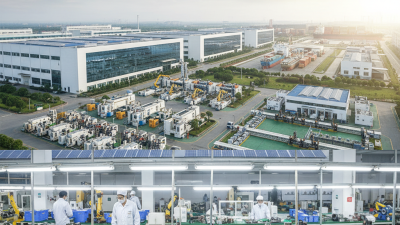
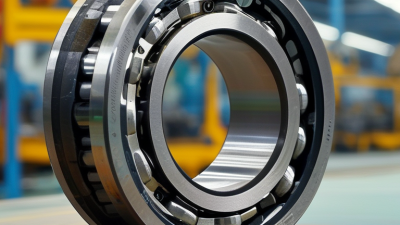
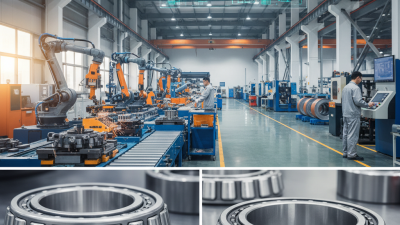
Choosing a reliable bearing supplier in China requires more than comparing prices. A polished website cannot reveal raceway accuracy, heat-treatment consistency, or actual production capacity. This guide examines ten China Bearing Factory candidates from a global buyer’s perspective, focusing on manufacturing experience, quality systems, export capability, and customer support.
The evaluation considers practical details that affect daily operations. These include bearing steel traceability, CNC machining, grinding tolerances, assembly cleanliness, grease selection, and load-testing procedures. Factory audits, product samples, inspection records, and independent certifications also matter. A dependable supplier should explain its process clearly and provide stable documentation. Packaging deserves attention too. Moisture-resistant paper, sealed cartons, and readable batch labels can prevent costly warehouse failures.
No ranking is perfect. Supplier information changes, and some manufacturers serve only specific industries or order volumes. That limitation deserves attention. Buyers should verify current certifications, production locations, test reports, and export terms before signing a contract. Site visits or third-party inspections can reveal details that catalogs often hide, such as crowded storage areas or inconsistent labeling.
The factories discussed here may suit automotive, agricultural, industrial, and machinery applications. However, “top” does not mean universally best. A small specialist may outperform a larger exporter for customized bearings. Real value depends on tolerance requirements, annual demand, delivery expectations, and after-sales communication. This overview offers a practical starting point, not a substitute for technical validation.
Top 10 China Bearing Factories for Global Buyers?
China’s bearing industry serves global buyers through a broad, specialized supply network. A practical Top 10 list should not rely only on sales claims. It should examine production equipment, heat-treatment control, inspection systems, and export experience. Leading factories often produce deep-groove, tapered-roller, spherical, and customized bearings. Their workshops may include automated grinding lines, clean assembly areas, and digital measurement equipment. Some suppliers support original equipment projects, while others focus on replacement markets.
Reliable sourcing requires evidence, not polished catalogs. Buyers should request material certificates, dimensional reports, load ratings, and traceability records. Factory audits can reveal storage conditions, gauge calibration, and packaging quality. A bearing may look flawless but still fail under vibration, poor lubrication, or incorrect mounting. That risk deserves honest discussion. International suppliers also need clear documentation, stable communication, and packaging suited to long sea routes. Certifications help, but they do not replace independent checks.
Tips: Compare three samples from different production lots. Test noise, rotation smoothness, and radial play. Confirm steel grade and grease specification. Ask how rejected parts are recorded. A low price can hide inconsistent tolerances. Build a small trial order before approving regular shipments. Recheck performance after installation, because real operating conditions may expose weaknesses that factory reports miss.
Choosing the top ten Chinese bearing factories requires more than checking export volume or attractive catalogs. A serious review starts with production capability. Inspect machining lines, heat-treatment equipment, grinding accuracy, and final inspection stations. Ask how each process is recorded. Request recent test reports, material certificates, and traceable batch numbers. An audit should include factory floors, not only meeting rooms.
Quality systems matter, but certificates alone are insufficient. Verify the certificate scope, issuing body, and renewal date. Review sampling plans, dimensional records, noise testing, and failure analysis procedures. Ask for samples from normal production, not specially prepared pieces. Test them independently when the application carries high loads or runs continuously. Small details matter. Seal fit, surface finish, packaging, and rust protection can affect service life. A reliable supplier also explains tolerances clearly and answers technical questions without vague promises.
Capacity and communication deserve equal attention. Compare lead times, minimum order quantities, tooling ownership, spare parts support, and contingency plans. Check whether engineers can discuss lubrication, clearance, load ratings, and operating temperature with evidence. Visit references carefully, because one successful project does not prove consistent performance. A polished website is not proof. I would also record weaknesses openly, such as slow document updates or uneven packaging. That reflection may feel inconvenient, but it prevents overrating a factory. The final shortlist should reward verified performance, transparent records, and practical cooperation rather than the lowest quotation.
China’s bearing sector combines large-scale production with increasingly specialized engineering. The China Bearing Industry Association reported annual output above 20 billion bearing sets in recent years, showing the depth of its manufacturing base. The ten profiles in this review focus on different strengths: precision miniature bearings, automotive wheel bearings, heavy-duty cylindrical designs, tapered roller units, spherical bearings, ceramic hybrids, agricultural parts, electric-motor bearings, slewing systems, and customized industrial assemblies.
Their differences matter to global buyers. Some factories operate automated grinding lines and in-house heat-treatment furnaces. Others rely more heavily on external suppliers. ISO 9001 certification supports process control, while ISO 281 remains useful for comparing calculated bearing life. However, certification alone is not proof of consistent performance. Buyers should request dimensional inspection records, steel traceability, noise data, and batch-level test results. Small details matter. A clean packing room can reveal more than a polished website.
Market research from Grand View Research estimated the global bearings market at more than USD 120 billion in 2023, with continued growth expected through the decade. That expansion creates opportunity, but also confusion. Product catalogs may list similar load ratings while hiding differences in lubrication, sealing, and inspection frequency. The strongest China-based manufacturers usually combine export experience, application engineers, stable raw-material sourcing, and responsive after-sales support. Still, “leading” is not permanent. A factory may excel in standard radial bearings yet struggle with low-temperature applications or urgent custom tooling. Careful sampling remains necessary.
| Profile | Primary Manufacturing Region | Operational History | Main Bearing Categories | Typical Bore Range | Key End-Use Industries | Manufacturing Capabilities | Quality and Compliance | Export Readiness | Best-Fit Buyer Requirement |
|---|---|---|---|---|---|---|---|---|---|
| Manufacturer 01 | Eastern China Yangtze River Delta |
Established industrial supplier with several decades of bearing production experience | Deep-groove ball Angular-contact ball Cylindrical roller | Approximately 10–300 mm | Electric motors, pumps, gearboxes, industrial machinery and general mechanical equipment | Automated grinding, superfinishing, heat treatment and batch inspection | ISO 9001 quality-management system commonly maintained for export production | Experienced with container shipments, OEM drawings, export packaging and private-label documentation | High-volume industrial buyers seeking a broad standard-bearing range |
| Manufacturer 02 | Central China Henan industrial belt |
Long-established heavy-bearing producer serving domestic and overseas machinery sectors | Spherical roller Tapered roller Thrust roller | Approximately 50–1,000 mm | Mining, steel, cement, construction equipment and material-handling systems | Large-lathe machining, forging, induction hardening and dimensional inspection for oversized components | Quality systems are generally supported by traceability records and material inspection reports | Suitable for project quotations, heavy-duty replacement programs and engineered packing requirements | Users requiring large or high-load bearings for harsh operating environments |
| Manufacturer 03 | Eastern China Zhejiang manufacturing cluster |
Established mass-production supplier focused on standardized bearing applications | Miniature ball Small deep-groove ball Flanged ball | Approximately 1–50 mm | Small motors, office equipment, appliances, instruments and light automation | High-speed automated assembly, noise testing, grease filling and sealed-bearing production | Export lots are typically managed with incoming, process and final inspection controls | Efficient for mixed cartons, recurring replenishment and customized seal or lubricant specifications | OEMs needing compact bearings with consistent noise and vibration performance |
| Manufacturer 04 | Eastern China Shandong industrial region |
Established supplier with experience in automotive and general industrial bearing applications | Wheel bearings Tapered roller Hub assemblies | Approximately 25–150 mm | Passenger vehicles, commercial vehicles, trailers and agricultural machinery | Precision turning, controlled heat treatment, assembly-line testing and seal-performance checks | Automotive-oriented production may include IATF 16949-based quality controls, subject to factory scope | Suitable for aftermarket packaging, application matching and regular international replenishment | Automotive distributors requiring application-specific replacement products |
| Manufacturer 05 | Central China Hunan and neighboring industrial areas |
Specialized producer with a long operating record in railway and transportation components | Railway axlebox Spherical roller Cylindrical roller | Approximately 80–320 mm | Rail transport, heavy vehicles, industrial drives and large rotating equipment | Forging, precision grinding, ultrasonic inspection and controlled assembly for high-load applications | Project-specific inspection plans and material traceability are commonly required for railway-related orders | Strong fit for technical tenders, inspection documentation and long-term supply contracts | Buyers prioritizing load capacity, traceability and documented acceptance procedures |
| Manufacturer 06 | Eastern China Jiangsu manufacturing corridor |
Modern industrial supplier serving motors, automation and energy-equipment manufacturers | Angular-contact ball Thin-section ball Insulated bearings | Approximately 15–220 mm | Servo motors, robotics, wind-power equipment, machine tools and industrial automation | Controlled atmosphere heat treatment, precision superfinishing, electrical-resistance testing and clean assembly | ISO 9001 practices are commonly combined with application-specific process validation | Capable of supporting technical drawings, sample approval, small pilot runs and repeat OEM orders | Engineering buyers needing low-friction, high-speed or electrically insulated solutions |
| Manufacturer 07 | Eastern China Liaoning heavy-industry region |
Long-running heavy-bearing manufacturer with experience in steel and process industries | Four-row roller Large cylindrical roller Custom bearing units | Approximately 120–2,000 mm | Steel mills, rolling mills, mining machinery, shipbuilding and large gear systems | Large-scale forging, CNC machining, heat treatment, destructive testing and dimensional mapping | Large-bearing orders generally require batch records, inspection certificates and customer-specific acceptance criteria | Appropriate for engineered exports, project logistics and on-site replacement planning | Heavy-industry operators requiring oversized bearings and application engineering support |
| Manufacturer 08 | Eastern China Jiangsu and Zhejiang supply chain |
Established supplier focused on agricultural, construction and off-highway equipment | Spherical roller Tapered roller Mounted units | Approximately 20–250 mm | Agricultural machinery, conveyors, forklifts, construction equipment and power transmission | Sealed-unit assembly, housing machining, grease filling and corrosion-resistant surface treatment | Production commonly includes dimensional, torque, sealing and rotational inspection | Well suited to aftermarket kits, agricultural seasonality and mixed-model purchasing programs | Distributors seeking ready-to-install bearing units and replacement assemblies |
| Manufacturer 09 | Southern China Guangdong manufacturing area |
Export-oriented producer serving electronics, appliances and compact drive systems | Miniature ball Stainless-steel ball Ceramic-hybrid ball | Approximately 1–35 mm | Consumer electronics, medical devices, small fans, precision instruments and laboratory equipment | Clean assembly areas, automatic lubrication, low-noise testing and corrosion-resistance verification | Export production is typically supported by lot traceability and RoHS-related material declarations when requested | Efficient for sample development, small components, custom seals and air-freight orders | Buyers requiring compact, quiet or corrosion-resistant bearings |
| Manufacturer 10 | Eastern China Multi-site production network |
Large-scale bearing group structure with multiple product lines and export channels | Ball bearings Roller bearings Special-purpose bearings | Approximately 5–1,200 mm | Automotive, energy, industrial automation, machinery, logistics and maintenance markets | Integrated forging, machining, heat treatment, grinding, assembly, testing and application engineering | Quality certification scope, laboratory capability and customer audits may be available by production site | Strong capacity for global distribution, framework agreements, technical audits and multi-location sourcing | International buyers seeking broad coverage, supply continuity and structured vendor management |
Evaluating ten leading Chinese bearing factories requires more than comparing price lists. Fortune Business Insights valued the global bearing market at about USD 128 billion in 2023. That scale increases pressure on suppliers to prove stable quality, not just large output. In practical sourcing audits, buyers should review steel certificates, heat-treatment curves, grinding records, and final inspection data. ISO 9001 supports process control, while ISO 281 helps verify bearing life calculations. Certificates alone are not enough.
Production capability separates serious factories from trading operations. Strong candidates usually control forging, turning, heat treatment, precision grinding, assembly, and automated inspection. Buyers should ask for monthly capacity by bearing type, equipment age, maintenance records, and batch traceability. An ISO/IEC 17025-accredited laboratory adds credibility to dimensional, noise, vibration, and endurance testing. IATF 16949 is valuable for automotive applications, while ISO 14001 shows structured environmental management.
Look for evidence.
A useful comparison also includes rejection rates, corrective-action speed, and sample consistency. The best factories can provide Cpk data for critical dimensions, although many public profiles omit it. That omission deserves questions. Some suppliers report impressive annual capacity but rely heavily on subcontracted processes, weakening traceability. A factory visit should follow one batch from raw material storage to packed cartons. This is slower, but revealing. Fortune’s market forecast expects continued growth through 2032, yet demand alone does not guarantee dependable manufacturing. Quality claims must remain supported by dated records, repeat testing, and an audit scope that matches the products being purchased.
A reliable factory should provide more than a low quotation. Global buyers need clear export documents, stable lead times, and responsive technical support. Ask whether the factory can prepare invoices, packing lists, certificates, and inspection reports accurately. Confirm the shipping term, destination port, and responsibility for customs clearance. Small details matter. A delayed document can stop a container.
Customization separates capable manufacturers from simple catalog suppliers. Discuss bore size, radial clearance, seals, cage material, grease type, surface treatment, and packaging requirements. Send a technical drawing with tolerances and operating conditions. Request samples before approving mass production.
Experienced factories should explain testing methods, noise limits, hardness results, and batch traceability. Some suppliers accept custom orders but struggle with small trial quantities. That weakness deserves attention.
Pricing should be compared by landed cost, not unit price alone. Include tooling, sampling, inspection, freight, duties, packaging, and possible replacement costs. A cheaper bearing may have inconsistent noise or shorter service life. During my own supplier reviews, I have sometimes focused too heavily on quotation speed. That was a mistake. Factory audits, production photos, sample measurements, and customer references offer stronger evidence. Ask how complaints are recorded and resolved. Review warranty terms carefully. Payment schedules, minimum order quantities, and production capacity should match your purchasing risk. A perfect spreadsheet cannot replace physical verification.