How to Choose a China Bearing Supplier
Choosing a China Bearing supplier is more than comparing prices or browsing a polished catalog. The right choice depends on whether a manufacturer can meet your load, speed, temperature, and service-life requirements consistently. A bearing that looks correct on a sample may still perform poorly if its material, heat treatment, or clearance differs from the agreed specification.
This guide explains how to assess suppliers using details you can verify. Check product drawings, tolerance grades, steel specifications, lubrication options, inspection records, and batch traceability. Ask how the supplier controls production changes and handles nonconforming parts. Clear answers matter. So do recent test reports, sample evaluations, and realistic production lead times. When practical, compare samples under conditions close to your actual application, such as the operating speed and load of your equipment.
Price is only one part of the decision. A lower quotation may leave out packaging, inspection steps, or support after delivery, so confirm exactly what is included. Communication deserves attention, too: note how quickly the supplier answers technical questions and whether its explanations match the documents. No checklist is perfect. A site visit or independent inspection can add useful evidence, but neither guarantees future performance. Keep a record of specifications, approvals, and agreed corrective actions. With careful checks, buyers can make a more informed choice and build a working relationship based on measurable quality rather than promises alone.
Define Bearing Requirements and Application Conditions
How to Choose a China Bearing Supplier
Define Bearing Requirements and Application Conditions
A useful supplier inquiry starts with the operating conditions, not a part number. Specify radial and axial loads, peak loads, shaft speed, duty cycle, and expected service life. Add operating temperature, vibration, moisture, dust, and available lubrication. A bearing in a clean, steady-speed pump faces different demands from one near a hot, dusty conveyor. Include shaft and housing dimensions, fit, and space limits.
ISO 281:2007 defines the basic rating-life method for rolling bearings. Its L10 life is the life that 90% of a sufficiently large group of identical bearings are expected to reach or exceed under stated conditions. It is a statistical estimate, not a service-life guarantee. Ask suppliers to show the load and speed assumptions behind their life estimates. If your duty cycle is only approximate, say so; precise-looking inputs can still mislead.
Tips: Send a drawing, load profile, and photos of the installation area. Note start-stop frequency and any shock loads. Ask how proposed materials, seals, lubrication, and tolerances match those conditions. Check the assumptions carefully. A missing temperature or contamination detail can change the recommendation, and sometimes the initial specification needs revision.
Identify Suitable China Bearing Supplier Types
China bearing suppliers generally fit three categories: specialized manufacturers, OEM-focused factories and trading companies. Specialized manufacturers often suit buyers needing narrow product families, such as tapered roller bearings or miniature bearings. OEM-focused factories may offer custom dimensions, seals or packaging, but confirm who controls tooling and inspection. Trading companies can consolidate several bearing types. Ask whether they can identify the actual production site and provide batch-level records.
Grand View Research valued the global bearing market at USD 126.4 billion in 2023 and projected an 8.2% compound annual growth rate from 2024 to 2030.
This broad market estimate signals varied demand; it does not prove any supplier’s capability. That matters. Match supplier type to your application, order volume and tolerance needs. For a pump shaft, request measured bore and outer-diameter results, runout data, material traceability and heat-treatment records. For a small trial order, check whether the supplier can preserve the same specifications at scale.
A polished catalog is not enough. Request a sample from the intended production line, then compare its markings and measurements with the quotation. Not enough. Ask who handles nonconforming parts, and how corrective actions are documented. A trading firm may coordinate smoothly, yet leave technical questions unanswered; a factory may know its process, yet communicate slowly. Treat that trade-off as something to verify, not assume.
Source: Grand View Research, Bearing Market Size, Share & Trends Analysis Report, 2024–2030.
Assess Manufacturing Capability and Quality Controls
How to Choose a China Bearing Supplier
Assess Manufacturing Capability and Quality Controls
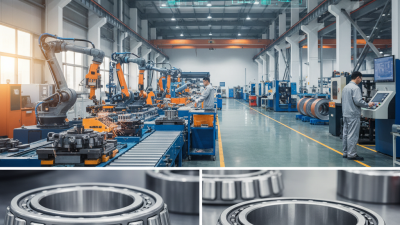
A supplier’s real capability shows on the shop floor, not only in a polished catalog. Ask to see the turning, heat-treatment, grinding, and inspection stages. Check whether production records link each batch to its steel, furnace cycle, and final measurements. For a sample bearing, request measured bore, outside diameter, and radial runout results—not just a pass certificate. The 2023 World Economic Forum Global Lighthouse Network report covered 132 advanced factories, highlighting the growing use of connected production data. For a bearing buyer, the practical lesson is simple: request traceable records, then confirm that operators actually use them.
Quality controls should cover incoming steel, heat treatment, dimensional inspection, noise, and vibration. Ask how often gauges are calibrated and what happens when a result falls outside tolerance. Review a recent inspection log, including rejected parts and corrective actions. A supplier that shares only perfect results may be showing an incomplete picture. ISO 492 sets dimensional and running-accuracy tolerances for rolling bearings, while ISO 281 provides a method for calculating basic rating life. Neither standard guarantees service life in your machine. Still, they give both sides a common technical baseline. During a factory visit, compare the written procedure with the actual inspection bench; small gaps matter.
How to Choose a China Bearing Supplier: Assess Manufacturing Capability and Quality Controls
Use material certificates and independent test results to check that incoming bearing steel meets the agreed specification. The chart shows reference composition limits for 100Cr6 steel by mass; confirm the applicable standard edition and purchase requirements with your supplier. Material chemistry is one quality-control check and does not by itself establish overall manufacturing capability.
Verify Certifications, Samples, and Product Performance
How to Choose a China Bearing Supplier
Verify Certifications, Samples, and Product Performance
A certificate is a starting point, not proof that every shipment will meet your requirements. Ask for current documents, confirm the issuing body, and check that the listed scope covers the bearing type you need. Match the supplier’s drawings and material records to your own specification. Small mismatches matter.
Request samples from the same production line and process planned for your order. Measure bore and outer diameter with calibrated instruments, then check runout, noise, and rotation by hand. For demanding applications, arrange load or endurance testing against agreed acceptance criteria. Keep the results and sample identification in writing. Details matter.
Performance depends on fit, lubrication, speed, load, and operating temperature—not just a catalog rating. Share these conditions with the supplier and ask how its data was produced. Compare results under similar test conditions. A polished sample can still hide variation between batches, so one sample is not enough. I would also revisit assumptions after the first trial; a test setup may not reflect the real machine. Ask for traceable inspection records before approving production.
Compare Pricing, Logistics, and After-Sales Support
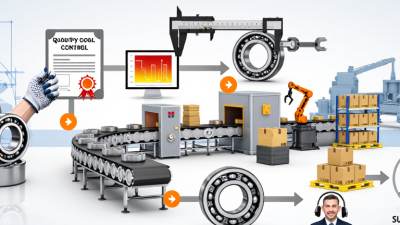
Choosing a China bearing supplier means comparing total landed cost, not just unit price. Request an itemized quote covering bearing specifications, minimum order quantity, packaging, and freight. Confirm that the quoted material, tolerance, and lubrication match your application. Details matter. A lower price may reflect different packaging or inspection scope, so compare like-for-like offers before deciding.
Check production lead time separately from transit time. Ask which shipping method is included, who arranges freight, and how tracking updates are shared. For example, a shipment of heavy cartons may need stronger pallet protection to prevent movement during handling. Confirm the estimated dispatch date in writing. Port delays can still happen, even with a clear schedule, so leave a practical buffer.
After-sales support should be specific. Agree on how to report a defect, what evidence is needed, and when the supplier will respond. Ask whether batch identification and inspection records can accompany each shipment. A helpful supplier explains the process plainly, rather than promising everything will be perfect. I would still check the first delivery carefully; planning misses things sometimes. Compare warranty terms and replacement arrangements before placing a larger order.