What Are the Top Mounted Bearing Types?
Choosing the right Mounted Bearing begins with the machine, not the catalog page. A dusty conveyor, a washdown line, and a packaging machine demand different solutions. Their loads, speeds, shaft sizes, alignment conditions, and maintenance access can vary sharply.
Tedric A. Harris, a respected bearing engineer and author, expressed a central principle of bearing selection: “Bearing life depends on the conditions under which it operates.” That idea remains practical today. A pillow block bearing may suit a long conveyor shaft. A flanged bearing can provide cleaner positioning near a machine wall. Take-up bearings help manage belt tension, while hanger bearings support shafts inside conveying systems. Each design solves a different installation problem.
Small details matter.
A technician may notice grease escaping around a seal, vibration traveling through a steel frame, or a housing shifting after repeated starts. These signs often reveal poor selection, incorrect mounting, contamination, or insufficient lubrication. They should not be dismissed as ordinary wear.
This guide examines the top Mounted Bearing types and explains where each design performs best. It considers housing style, bearing insert construction, sealing, load direction, misalignment tolerance, and maintenance requirements. It also recognizes an uncomfortable truth: even experienced teams can choose correctly on paper and still miss field conditions. Temperature, moisture, impact loads, and limited service access may change the result.
The goal is not to name one universal winner. It is to connect each bearing type with the real operating environment, using engineering evidence and practical maintenance experience.
Definition and Role of Mounted Bearings
What Are the Top Mounted Bearing Types?
Definition and Role of Mounted Bearings
Mounted bearings combine a rolling bearing with a housing. The housing holds the bearing firmly and supports a rotating shaft. This design simplifies installation, alignment, and routine replacement in many machines.
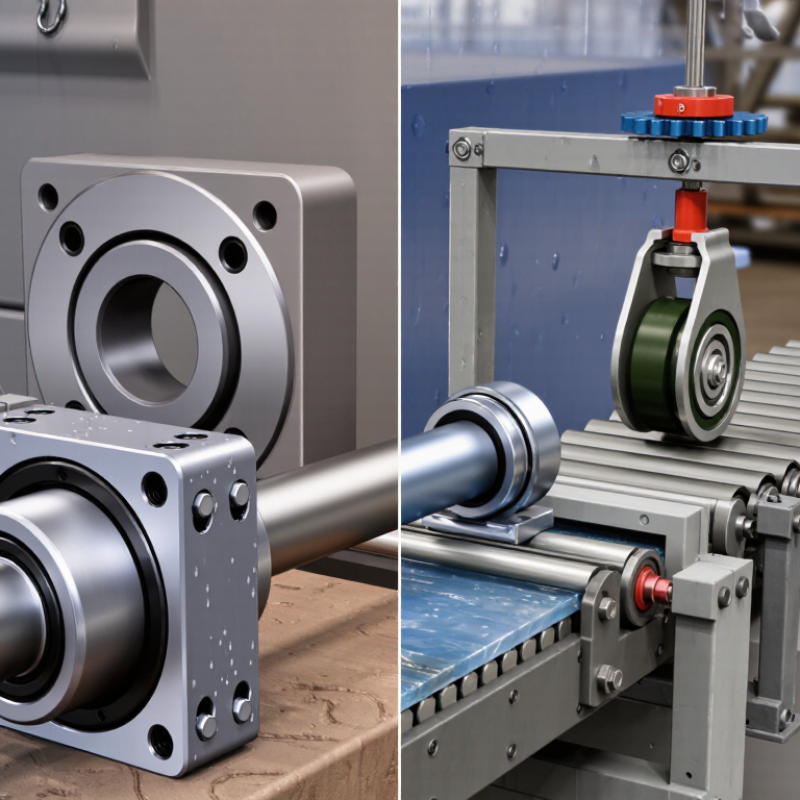
Common types include pillow block, flange, take-up, hanger, and cartridge bearings. Pillow block bearings suit conveyor shafts and general power transmission. Flange bearings mount against a machine wall, saving space around the shaft. Take-up bearings allow shaft adjustment, which helps maintain conveyor belt tension. Hanger bearings support shafts in confined areas. Cartridge bearings offer a compact structure for equipment with limited mounting space.
The bearing itself carries radial loads and sometimes axial loads. The housing also helps protect internal parts from dust, moisture, and impact. Still, protection is not unlimited. A poorly sealed housing can fail quickly in a dirty workshop. Shaft misalignment creates uneven contact, heat, and vibration. Selection should consider load, speed, temperature, shaft size, lubrication, and the surrounding environment. No single type fits every machine.
Tips: Check the shaft surface before installation. It should feel smooth, without deep scoring or rust. Tighten fasteners evenly, then inspect for unusual noise after startup. A simple rule helps, but it is not perfect: match the bearing to the machine’s real working conditions, not only its catalog rating.
How Mounted Bearings Are Classified
What Are the Top Mounted Bearing Types?
How Mounted Bearings Are Classified
Mounted bearings are bearing units fixed inside a housing. Their classification depends on housing shape, shaft support, load direction, and installation method. This structure helps engineers match a bearing to real operating conditions, rather than choosing by size alone.
Pillow block bearings sit on a base and support horizontal shafts. Flange bearings attach to a vertical or side panel, often with two or four mounting holes. Take-up bearings include sliding housings that adjust shaft tension. Hanger bearings support shafts suspended from above. Cartridge units fit into prepared bores and keep the shaft centered. Each housing style solves a different alignment problem.
Mounted bearings are also classified by the internal bearing and locking method. Deep-groove ball bearings suit moderate radial loads and common machinery speeds. Roller bearings handle heavier loads but may need more accurate alignment. Set-screw locking is simple and practical, while eccentric locking can provide a firmer grip during rotation. Adapter sleeves offer another option for larger shafts.
Material and sealing create further categories. Cast housings resist impact, while pressed steel versions reduce weight and cost. Rubber seals help block dust and moisture near conveyors or outdoor equipment. Greaseable units support periodic maintenance, but over-greasing can raise temperature. I have seen failures caused by incorrect mounting, not poor bearing quality. Classification narrows the choice, yet shaft alignment, load changes, and working conditions still require careful review.
Common Types of Mounted Bearings
What Are the Top Mounted Bearing Types?
Common Types of Mounted Bearings
Mounted bearings combine a bearing insert with a housing, making installation easier on shafts and supporting structures. Pillow block bearings are widely used on conveyors, fans, and processing equipment. Their base sits on a flat surface, and technicians can usually inspect or replace them without removing the entire shaft. Correct shaft alignment still matters. A simple housing cannot correct severe misalignment.
Flange-mounted bearings attach to vertical panels or machine frames. Two-bolt, three-bolt, and four-bolt versions suit different load directions and mounting spaces. Take-up bearings include adjustable housings for conveyor shafts. They help maintain belt tension as stretching occurs. Cartridge bearings fit inside prepared housings and work well where compact, centered support is needed. Hanger bearings support shafts suspended beneath a structure, often in material-handling systems.
Split-housing bearings can simplify maintenance around large shafts. Workers open the housing instead of dismantling nearby equipment. That saves time, but poor tightening can create uneven loading. I have seen clean installations fail because grease paths were blocked or mounting bolts were ignored. Check the shaft diameter, radial load, axial load, speed, temperature, and contamination level before selection. Dusty areas may require seals, while wet areas need suitable corrosion resistance. Do not assume the largest bearing is the safest choice. It may increase friction, vibration, and operating cost. A practical inspection includes listening for roughness, checking temperature changes, and looking for looseness around the housing. Small details matter.
Key Factors for Selecting a Mounted Bearing
What Are the Top Mounted Bearing Types?
Pillow block bearings suit long shafts and straightforward conveyor layouts.
Flange bearings fit tighter spaces and support shafts through panels.
Take-up bearings allow tension adjustment, while hanger bearings support suspended shafts.
Cartridge bearings can simplify replacement when access is limited.
Selecting a mounted bearing starts with the real operating conditions, not the catalog photograph. Check shaft diameter, radial load, axial load, speed, temperature, vibration, and available space. Sealing matters in dusty workshops, washdown areas, and outdoor equipment. Relubrication intervals also affect labor costs.
ISO 281 defines basic rating life at 90% reliability, but this figure assumes controlled conditions. It is not a promise of service life.
Industry guidance from the U.S. Department of Energy consistently links alignment, lubrication, and maintenance practices with motor-system efficiency. A 2024 bearing market analysis by Grand View Research identifies industrial machinery as a major demand sector, reflecting the need for dependable rotating equipment. Still, selecting the largest bearing is not automatically safer. Oversizing can increase friction, heat, and cost. I have seen specifications fail because contamination was treated as an afterthought. A better choice matches the bearing type, seal design, housing material, and maintenance plan to the actual machine. Sometimes the overlooked detail is shaft tolerance.
Typical Applications Across Industries
What Are the Top Mounted Bearing Types?
Typical Applications Across Industries
Mounted bearings support rotating shafts while simplifying installation and maintenance. Common types include pillow block, flange, take-up, and hanger bearings. Each design suits a different machine layout and loading condition.
Pillow block bearings are widely used on conveyor systems, packaging lines, and agricultural equipment. Their raised housing supports horizontal shafts above a mounting surface. Flange bearings fit against vertical panels, making them useful in fans, pumps, and compact processing machines. They can save space when floor mounting is impractical.
Fit matters. A loose mounting surface may create vibration, noise, and early wear.
Take-up bearings work well on conveyors that need belt tension adjustment. Mining, recycling, and bulk material facilities often use them near tail pulleys. Hanger bearings support shafts inside long conveying systems, including grain handling and wastewater equipment.
Dust changes everything. Sealed designs help, but they cannot replace regular inspection and correct lubrication.
In food processing areas, corrosion-resistant housings and careful cleaning routines are important. Textile machines may need smooth operation at high speeds, while steel mills demand stronger protection against heat and contamination. Selecting a bearing requires checking radial loads, shaft size, speed, temperature, and alignment.
Real installations are rarely perfect. Engineers sometimes underestimate contamination or maintenance access, then pay for that mistake later. A practical review of the operating environment usually prevents more trouble than choosing by load rating alone.