What Are the Top Small Bearing Types for Global Buyers?

Global buyers increasingly treat Small Bearing selection as a reliability decision, not merely a purchasing exercise. Grand View Research’s Ball Bearing Market Size, Share and Trends Analysis Report identifies expanding demand from automotive, industrial machinery, medical equipment, and aerospace applications. These sectors require compact components that tolerate speed, vibration, contamination, and limited installation space.

Several types deserve close attention. Deep-groove ball bearings remain versatile for electric motors, pumps, and conveyors. Miniature and flanged bearings suit instruments, robotics, and compact assemblies. Angular-contact bearings support combined radial and axial loads, while needle bearings offer high load capacity in narrow spaces. Stainless-steel versions resist moisture and cleaning chemicals. Ceramic hybrid bearings can reduce friction and electrical damage, although their higher purchase price needs careful justification.

Application changes everything. ISO 281 provides the standard framework for bearing life calculations, but laboratory life does not always match a dusty factory floor. SKF’s annual technical publications repeatedly emphasize lubrication, sealing, alignment, and operating conditions as major reliability factors. The World Bearing Association also highlights counterfeit risks and the importance of traceable supply channels.

There is no universal “top” bearing.

A buyer comparing suppliers should examine load ratings, speed limits, clearance, material, seal design, tolerances, certification, and delivery capability. MarketsandMarkets’ bearing industry analyses show continued demand for engineered and application-specific solutions, yet market forecasts cannot replace field testing. The right Small Bearing may cost more initially, but premature failure can stop a production line. This guide compares leading bearing types through a practical global-buying lens, while recognizing that supplier data can be incomplete and specifications still require independent verification.
What Are the Top Small Bearing Types for Global Buyers?

What Defines a Small Bearing and Its Main Applications?

A small bearing is a compact rolling element that supports motion while reducing friction between moving parts. In practical sourcing, many engineers call bearings with bores below 10 millimeters “miniature.” This boundary is not universal. Some industries classify them by outer diameter, weight, or load capacity instead.

Their small size supports precise movement in tight spaces. Common applications include dental handpieces, miniature motors, camera lenses, robotic joints, drones, encoders, and medical instruments. A bearing inside a compact actuator may rotate thousands of times per minute. It must remain stable despite limited installation space. In a drone motor, low weight matters. In a sensor, smooth rotation and minimal vibration matter more. Application changes the correct bearing choice.

Buyers should check bore size, outer diameter, width, radial load, axial load, speed, temperature, and sealing needs. Stainless steel can suit humid environments, while ceramic or hybrid designs may support demanding speed requirements. Seals help block dust, but they can increase friction. That trade-off is easy to overlook. Grease selection also affects starting torque and service life.

Small does not mean simple. A poorly matched bearing may create noise, heat, or early wear. Tolerances, shaft fit, housing accuracy, and installation force deserve equal attention. This is where specifications sometimes fail in real equipment. Testing under actual loads remains wiser than choosing by size alone.

Which Small Bearing Types Are Most Commonly Used Worldwide?

For global buyers, deep-groove ball bearings remain the most common small bearing type. Their simple design supports electric motors, fans, pumps, appliances, and office equipment. They handle radial loads well and tolerate moderate axial loads from both directions. Standardized dimensions also simplify replacement across different maintenance networks. That practicality matters.

Miniature ball bearings serve compact products such as camera modules, dental tools, small actuators, and precision instruments. Flanged versions help retain the bearing inside a thin housing. Angular-contact ball bearings appear in compact spindles, robotics joints, and equipment requiring controlled axial positioning. Thrust ball bearings suit light axial loads in small turntables and indexing mechanisms.

They are not interchangeable. Misreading the load direction can produce noise, heat, and early failure.

In purchasing work, buyers should check bore size, outside diameter, width, clearance, seal material, speed, and operating temperature. A sealed bearing may reduce maintenance, while an open bearing can support relubrication in suitable equipment. Dust, moisture, and frequent start-stop cycles often matter more than catalogue load ratings. Maintenance inspections often reveal failures caused by ignored housing fits. That oversight is easy. Measurement and installation practice deserve equal attention. No universal best type exists; the right choice depends on load, speed, space, and service conditions.

How Do Load, Speed, and Precision Affect Bearing Selection?

What Are the Top Small Bearing Types for Global Buyers?

Small bearings differ sharply in how they handle load, speed, and precision. Deep-groove ball bearings suit radial loads and moderate axial loads. They are common in fans, motors, and compact gear systems. Angular-contact bearings support combined loads at higher speeds. Their contact angle must match the operating force. Thrust bearings handle axial force, but they perform poorly under heavy radial loading. Needle bearings provide high load capacity in narrow spaces. Space is often the real limitation.

Load rating alone does not decide the correct bearing. A bearing carrying a steady 50-newton load differs from one facing vibration and shock. At 20,000 rpm, friction, cage design, and lubrication become critical. Yet high speed does not always require the highest precision grade. Precision affects runout, noise, and shaft alignment. For optical equipment, even slight radial play can distort readings. For a small pump, sealing and temperature resistance may matter more. The application decides.

In field checks, contamination causes many early failures. A sealed bearing can protect against dust, but its seal may increase drag. Open bearings run freely, although they need cleaner surroundings. Buyers should confirm bore size, outer diameter, width, clearance, material, and lubricant compatibility. Documentation should include dimensional tolerances and inspection records. I have seen selections based only on price. That approach looked efficient, but replacement costs grew quickly. A better decision still needs testing under real speed, temperature, and load. Even then, the result may need revision.

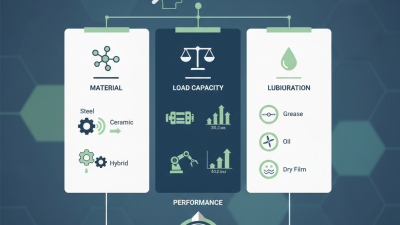
Selection is a balance between load direction, operating speed, and required precision. Deep-groove ball bearings provide the most versatile overall profile, angular-contact ball bearings are preferred for combined loads and higher precision, while needle and cylindrical roller bearings prioritize radial load capacity. Thrust ball bearings are specialized for axial loads and are generally less suitable for high-speed applications. Scores are comparative engineering ratings for common small-bearing designs, not brand or company specifications.

What Materials, Seals, and Designs Suit Different Environments?

Small bearings perform reliably when their materials match the working environment. Hardened chrome steel suits general machinery, moderate loads, and controlled indoor conditions. Stainless steel handles moisture, washdown areas, and mild chemical exposure more effectively. However, stainless steel may carry less load than comparable chrome steel. That trade-off matters. Hybrid bearings use steel rings with ceramic balls, making them useful in electric motors and precision equipment. They can reduce electrical current damage and support higher speeds.

Seal selection affects service life more than many buyers expect. Rubber contact seals block water, dust, and grease loss, but they create additional friction. Metal shields reduce contamination while allowing smoother high-speed operation. Open bearings suit clean housings with external lubrication systems. In dusty conveyors, poorly selected seals can fail quickly. I have seen a sealed bearing overheat because its grease was unsuitable for the operating temperature.

Bearing design should follow the load direction and available space. Deep-groove types handle combined radial and moderate axial loads. Flanged designs simplify positioning in compact assemblies. Thrust bearings suit mainly axial forces, not heavy radial loads. Thin-section bearings save space but need careful alignment. Clearance, cage material, lubrication, and temperature ratings also require verification. A sealed bearing is not automatically the safest choice. Application data is often incomplete, and that uncertainty deserves testing before large-volume purchasing.

How Can Global Buyers Compare Quality, Standards, and Suppliers?

Global buyers often choose deep-groove, miniature, flanged, or thrust bearings for compact equipment. The right type depends on load direction, speed, available space, and sealing conditions. A miniature bearing may fit a small motor, but its limited load capacity can surprise inexperienced buyers. Flanged bearings simplify axial positioning. Thrust bearings handle axial force, not every radial application.

Quality comparison should begin with measurable details, not attractive catalogs. Check bore diameter, outside diameter, width, radial clearance, runout, noise, vibration, and rated load. Ask whether measurements follow recognized standards, such as ISO dimensional and accuracy requirements. Material certificates, heat-treatment records, grease information, and seal specifications also matter. A bearing that feels smooth by hand may still fail under continuous heat and speed.

Supplier evaluation needs evidence from several production lots. Request inspection reports, traceability codes, sampling plans, and sample parts from the intended factory. An audit should examine grinding equipment, cleanliness, storage humidity, and final inspection procedures. Confirm whether quality certificates match the actual manufacturing site. A polished certificate is not proof of stable production. It is only one clue. Weaker suppliers may answer quickly but avoid precise tolerances. That warning deserves attention. Still, even careful buyers can overvalue price and underestimate packaging damage during ocean transport. Compare total cost, replacement risk, technical communication, and delivery consistency before approving a small bearing supplier.

What Are the Top Small Bearing Types for Global Buyers?
A practical comparison of performance, standards, quality controls, and supplier-selection criteria
Bearing Type Primary Load Capability Speed and Friction Profile Misalignment and Rigidity Typical Applications Relevant Standards and Ratings Buyer Quality Checks
Deep-Groove Ball Bearing Handles radial loads and moderate axial loads in both directions. High-speed capability; generally low running friction. Low tolerance for shaft or housing misalignment; standard versions provide moderate stiffness. Electric motors, fans, pumps, gearboxes, conveyors, household equipment, and general machinery. ISO 15 for boundary dimensions; ISO 492 for radial bearing tolerances; ISO 281 for rating life calculations; dynamic load rating is commonly designated as C. Check raceway finish, noise and vibration class, radial clearance, seal drag, dimensional tolerance, and grease consistency.
Angular-Contact Ball Bearing Supports combined radial and axial loads; axial capacity depends on contact angle and arrangement. Suitable for high speed when correctly preloaded and lubricated. Higher axial and tilting stiffness than a deep-groove design; requires correct mounting orientation. Machine-tool spindles, pumps, compressors, robotics, screw supports, and precision drives. ISO 15 for dimensions; ISO 492 for tolerances; ISO 281 for rating life; preload, contact angle, and paired arrangement must be specified. Verify contact angle, preload class, matched-pair condition, runout, noise, cage material, and temperature-rise test results.
Thrust Ball Bearing Designed primarily for axial loads; radial load capacity is limited and should not be assumed. Usually lower allowable speed than comparable radial ball bearings, especially under heavy axial load. Requires accurate axial alignment; poor tolerance for radial displacement and shaft misalignment. Turntables, low-speed actuators, vertical shafts, indexing mechanisms, and light axial-load assemblies. ISO 15 for applicable boundary dimensions; ISO 199 for thrust-bearing load ratings; ISO 492 for applicable tolerance requirements. Check axial load direction, washer flatness, raceway hardness, seating accuracy, lubrication, and allowable speed under the actual load.
Cylindrical Roller Bearing High radial-load capacity; some designs can carry limited axial loads depending on flange configuration. High load capacity with moderate-to-high speed capability; friction is typically higher than a deep-groove ball bearing. Good radial stiffness; separable designs simplify mounting. Axial displacement capability depends on design type. Electric motors, generators, gearboxes, industrial transmissions, and heavy-duty rotating equipment. ISO 15 for dimensions; ISO 492 for tolerances; ISO 281 for rating life; design suffixes identify flange and cage configurations. Check roller profile, flange geometry, internal clearance, cage strength, surface hardness, and axial-location requirements.
Needle Roller Bearing High radial-load capacity for a small radial cross-section; axial capacity is generally limited unless a thrust feature is included. Good speed capability when lubrication, raceway hardness, and guidance are adequate; friction can rise with high load or poor alignment. Compact and radially stiff; requires a properly finished raceway and accurate shaft or housing geometry. Automotive transmissions, planetary gears, pumps, compressors, rocker mechanisms, and compact mechanisms. ISO 1206 and ISO 3245 cover dimensions for applicable needle-bearing families; ISO 281 is used for rating-life methodology where applicable. Check needle diameter variation, roller skew control, raceway hardness, surface roughness, cage guidance, and lubricant supply.
Spherical Roller Bearing Very high radial-load capacity and substantial axial-load capability. Lower speed capability and higher friction than most small ball-bearing designs. Self-aligning; accommodates shaft deflection and housing misalignment within the specified limits. Vibrating screens, conveyors, crushers, fans, heavy gearboxes, and applications with shaft deflection. ISO 15 for dimensions; ISO 492 for tolerances; ISO 281 for rating life; internal clearance and permissible misalignment must be specified. Check roller-to-raceway contact, internal clearance, cage design, alignment capability, seal performance, and mounting procedure.
Global buyer comparison checklist: Confirm the required bore, outside diameter, width, load spectrum, speed, operating temperature, lubrication, sealing arrangement, contamination level, mounting method, and expected service life. Compare suppliers using the same technical specification and request dimensional inspection records, material certificates, heat-treatment records, cleanliness or contamination-control data, noise and vibration results, packaging details, traceability information, and a documented quality-management process. ISO 281 rating life is a calculation method rather than a guarantee of field life; actual life also depends on lubrication, contamination, installation, alignment, and operating conditions.