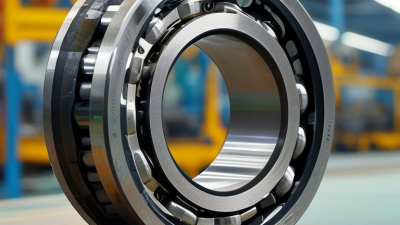
Choosing the right Thrust Roller Bearing in 2026 starts with the load, not the catalog headline. Axial force, speed, vibration, and available space all shape the choice. A bearing supporting a slow, heavy press behaves differently from one inside a fast-turning gearbox. Small details matter. A thin oil film, a rough housing seat, or a few degrees of misalignment can change operating life.
A useful principle, paraphrasing bearing researcher A. B. Jones’s analytical work rather than quoting him verbatim, is: “Bearing performance depends on the full operating condition, not the catalog label alone.” That distinction helps explain why one bearing type cannot suit every machine. Cylindrical roller thrust bearings often handle high axial loads in compact assemblies. Spherical roller thrust bearings can accommodate some misalignment. Tapered roller designs may suit arrangements where combined loads and mounting details matter. Each option brings trade-offs.
This guide compares the leading types expected to matter in 2026, including their load behavior, alignment tolerance, and typical applications. It also considers material, lubrication, installation, and maintenance—factors that are easy to overlook when selecting by load rating alone. Specifications still require careful checking against manufacturer data and actual service conditions. A catalog is a starting point, not a guarantee. Even a well-chosen bearing can disappoint when its housing, lubricant, or alignment is wrong. The rankings here are therefore practical guidance, not a universal rule.
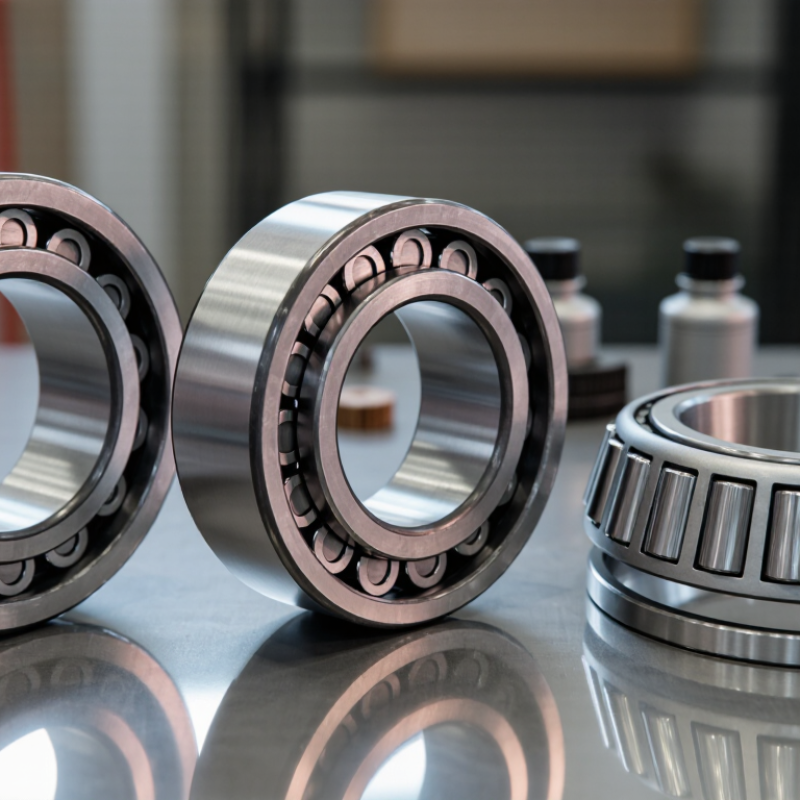
Thrust roller bearings carry force along a shaft, but their axial-load ratings depend on operating conditions. Cylindrical, tapered, and spherical roller designs handle different combinations of thrust, speed, and misalignment. A catalog number alone cannot confirm suitability.
ISO 281 addresses dynamic load ratings and rating life. For roller bearings, the basic rating life uses an exponent of 10/3, relating dynamic capacity, C, to equivalent dynamic load, P. Higher axial load can sharply reduce calculated life. Use the actual load spectrum, not just the peak value. Small details matter.
ISO 76 covers basic static load ratings. Compare the static rating, C0, with the equivalent static load, P0, to assess the static safety factor. This check matters during start-up, shock loading, or a stationary hold under load. A dented raceway can change later performance.
Standards provide a consistent calculation framework, not a complete installation verdict. Fit, lubrication, contamination, and misalignment still affect service life. I would verify the bearing arrangement and load direction before selecting a rating; that step is easy to rush. For unusual duty cycles, have the assumptions reviewed by a qualified bearing engineer.
What Are the Top Thrust Roller Bearing Types in 2026?
Compare Cylindrical, Needle, Spherical, and Tapered Thrust Roller Types
Cylindrical thrust rollers suit high axial loads when the assembly can accommodate a larger washer diameter and steady lubrication. They are less forgiving of misalignment, so shaft and housing alignment matter. Needle thrust bearings fit tighter spaces: their small roller diameter keeps the assembly thin, but limits load capacity compared with larger rollers. A tight fit helps. It does not solve poor lubrication.
Spherical thrust rollers handle heavy axial loads and tolerate some angular misalignment. They can also carry limited radial load, depending on the design and operating conditions. Tapered thrust rollers provide high stiffness and controlled axial positioning, making them useful where deflection must stay low. Their geometry can generate heat at higher speeds, so speed, preload, and lubrication need careful review. Choosing by load alone is a common design mistake.
For service-life estimates, ISO 281:2007 defines basic rating life L10 as the life reached by 90% of a sufficiently large group of identical bearings under stated conditions. That is a calculation basis, not a guarantee for a specific machine. Grand View Research’s 2024 bearing market report estimated the global bearing market at USD 132 billion in 2023, reflecting broad demand across industrial equipment. Yet market growth does not identify the right thrust type. Check axial load, speed, available space, misalignment, lubrication, and mounting stiffness against the actual duty cycle. One detail is easy to miss: contamination can shorten bearing life sharply, whatever the roller shape.
| Comparison Factor | Cylindrical Thrust Roller | Needle Thrust Roller | Spherical Thrust Roller | Tapered Thrust Roller |
|---|---|---|---|---|
| Roller shape and arrangement | Straight cylindrical rollers arranged radially around the bearing axis. | Long, slender cylindrical rollers arranged in a compact thrust cage. | Barrel-shaped rollers running against a spherical raceway. | Tapered rollers arranged so their contact lines converge toward a common point on the bearing axis. |
| Primary load capability | High axial loads in one direction; often selected where axial stiffness is important. | Axial loads in one direction, with useful load capacity for a small axial envelope. | Very heavy axial loads in one direction, with self-aligning capability. | Axial loads in one direction; geometry supports rolling contact suited to substantial thrust loads. |
| Radial load capability | Not designed to carry significant radial load; a separate radial bearing is generally needed. | Not designed to carry significant radial load; radial support is generally provided separately. | Primarily an axial-load bearing; do not assume it can replace a dedicated radial bearing. | Primarily designed for axial load. Combined-load suitability depends on the bearing design and arrangement. |
| Misalignment tolerance | Low. Accurate alignment and rigid, flat supporting surfaces are important. | Low. Proper alignment and support are needed to prevent uneven roller loading. | High relative to the other types; the spherical raceway permits limited shaft misalignment. | Generally low. Correct alignment and mounting are important for an even contact pattern. |
| Space considerations | Usually needs more radial space than a needle thrust design of comparable bore. | Well suited to applications with limited axial space and a compact surrounding design. | Typically larger and heavier than compact needle designs; used when load capacity and alignment tolerance matter. | Requires space for its tapered roller and raceway geometry; layout depends on the bearing arrangement. |
| Raceway and support requirements | Requires rigid, accurately aligned raceways or suitable hardened washers. | Can run directly against hardened, accurately finished adjacent surfaces when the design permits; otherwise use washers. | Requires appropriate shaft and housing raceways or matched bearing components, with robust support. | Requires correctly matched raceways and controlled mounting to maintain proper roller contact. |
| Common application examples | Vertical shafts, machine-tool thrust positions, and other applications with high axial stiffness requirements. | Automotive or industrial assemblies, gear mechanisms, and compact mechanisms with limited axial room. | Heavy-duty vertical shafts, presses, and machinery where high thrust loads and some misalignment may occur. | Specialized thrust arrangements in heavy machinery and applications designed around tapered roller contact. |
| Key selection caution | Check alignment, lubrication, speed, and whether a separate radial bearing is required. | Confirm raceway hardness and finish, lubrication, roller guidance, and available operating space. | Verify allowable misalignment, lubrication, mounting arrangement, and the need for separate radial support. | Confirm the specific design's load direction and combined-load limits, plus correct adjustment and lubrication. |
| Best suited when | High axial rigidity and load capacity are priorities, and alignment can be controlled. | Axial space is restricted and the design can provide suitable hardened raceways. | Very high thrust capacity and tolerance of limited misalignment are important. | A tapered-roller thrust arrangement is required and precise installation can be maintained. |
A thrust roller bearing catalog gives two useful limits: dynamic capacity C and static capacity C₀. They answer different questions. ISO 281:2007 defines basic dynamic rating life using C/P, where P is equivalent dynamic bearing load. For roller bearings, the life exponent is 10/3; the basic L10 life represents 90% reliability under stated conditions. In plain terms, C helps estimate fatigue life while the bearing rotates. A larger C may help, but only when load, speed, lubrication, and alignment are considered together.
Static capacity C₀ matters when the bearing is stationary, moving slowly, or exposed to brief heavy loads. ISO 76:2006 bases the static rating on a calculated contact stress associated with permanent deformation of about 0.0001 times a rolling element’s diameter. That is a small dent, but it can increase vibration and noise later. Don’t compare C and C₀ as if they were interchangeable. Real installations are messier than catalog examples; shock loads and uneven support can change the result.
Tips: Check the catalog’s stated load conditions, then calculate equivalent loads using the manufacturer’s method. Compare C with operating load for fatigue life, and C₀ with peak static load for indentation risk. Leave room for uncertainty. A neat spreadsheet can still miss misalignment. ISO 281 and ISO 76 provide the technical basis, not a guarantee of service life.
Typical design capability by bearing type. This chart classifies load direction; it does not show load capacity ratings.
A value of 1 means the bearing type is generally designed to support that load direction; 0 means it is generally not. Thrust spherical roller bearings can accommodate radial load in suitable applications, while the other types shown are primarily for axial load. Dynamic capacity C and static capacity C₀ are product-specific ratings, not fixed values for a bearing type. Compare them using the exact bearing designation and manufacturer data.
Thrust roller bearings handle axial loads, but their L₁₀ life depends on load and bearing design. Common types include cylindrical, tapered, spherical, and needle roller bearings. Each suits different load levels, speeds, and alignment conditions.
The basic estimate for roller bearings is
L₁₀ = (C/P)10/3 million revolutions.
Here, C is the bearing’s basic dynamic load rating, and P is the equivalent dynamic bearing load.
Consider a bearing rated at C = 100 kN under P = 50 kN. The load ratio is 2, giving an estimated L₁₀ life of about 10.1 million revolutions.
That is the estimate. L₁₀ represents the life that 90 percent of a sufficiently large group of identical bearings may reach or exceed under defined conditions.
It is not a promise for one bearing.
Real installations can differ. A dusty seal, poor lubrication, shaft misalignment, or shock loading can shorten service life. Check the manufacturer’s load-rating data and calculate P for the actual operating forces, rather than using axial load alone.
Operating conditions matter. The formula also assumes a consistent load and proper installation, which is not always what a machine delivers.
A brief load spike may be easy to miss, yet still affect the estimate.
Choosing a thrust roller bearing starts with the load, not the catalog title. Cylindrical roller designs carry heavy axial loads and resist shock, but they need accurate alignment. Spherical roller thrust bearings tolerate some shaft misalignment and housing deflection. Their speed limits and lubrication needs still require checking. Thrust ball bearings suit lighter loads and higher speeds, while tapered roller arrangements can support combined axial and radial forces. Details matter.
Speed changes the decision. A bearing that handles a high static load may overheat at operating speed, especially if lubricant supply is poor. Check the manufacturer’s speed limits, then compare them with the real duty cycle. Grease can simplify maintenance, but oil circulation may be preferable when heat removal is critical. Watch for rising housing temperature, unusual noise, and grease discoloration. Small clues.
Treat 90% reliability as a defined target, not a guaranteed bearing feature. Specify the operating hours, load variation, contamination level, and acceptable failure risk. A reliability calculation is only as useful as its assumptions; shaft deflection or intermittent lubrication can undermine an otherwise sound selection. Review field inspection records when available, and leave room for uncertainty. It is easy to overestimate service life from clean test conditions.