


How to Choose the Right Thrust Ball Bearing?
Choosing the right Thrust Ball Bearing begins with the load, not the catalogue.
Axial load direction, speed, temperature, shaft size, and available space all shape the decision. A bearing that looks suitable on paper may overheat under continuous thrust. It may also suffer from misalignment, vibration, or poor lubrication.
Market evidence shows why selection deserves care. Grand View Research reports continued growth in the global bearing market through 2030, driven by automotive, industrial machinery, energy, and automation demand. SKF’s technical guidance also emphasizes accurate load ratings, lubrication, sealing, and mounting practices. These factors directly influence bearing life, noise, and maintenance cost.
Tedric A. Harris, a recognized authority on rolling-bearing analysis, warned, “A bearing does not fail by itself; it is usually failed by its operating conditions.” That principle remains practical. The operating environment often matters more than the bearing’s name.
A useful selection process compares static and dynamic load ratings against real duty cycles. ISO 281 provides a recognized method for estimating rating life. However, calculated life is not a guarantee. Contamination, installation errors, and sudden shock loads can shorten service dramatically.
Small choice. Large consequence.
This guide examines bore size, thrust capacity, rotational speed, cage design, lubrication, material, and application conditions. It also questions a common assumption: the highest-rated bearing is not always the best bearing. Cost, accessibility, service life, and installation accuracy must be considered together. The process may never be perfect, but it can become more defensible, measurable, and reliable.
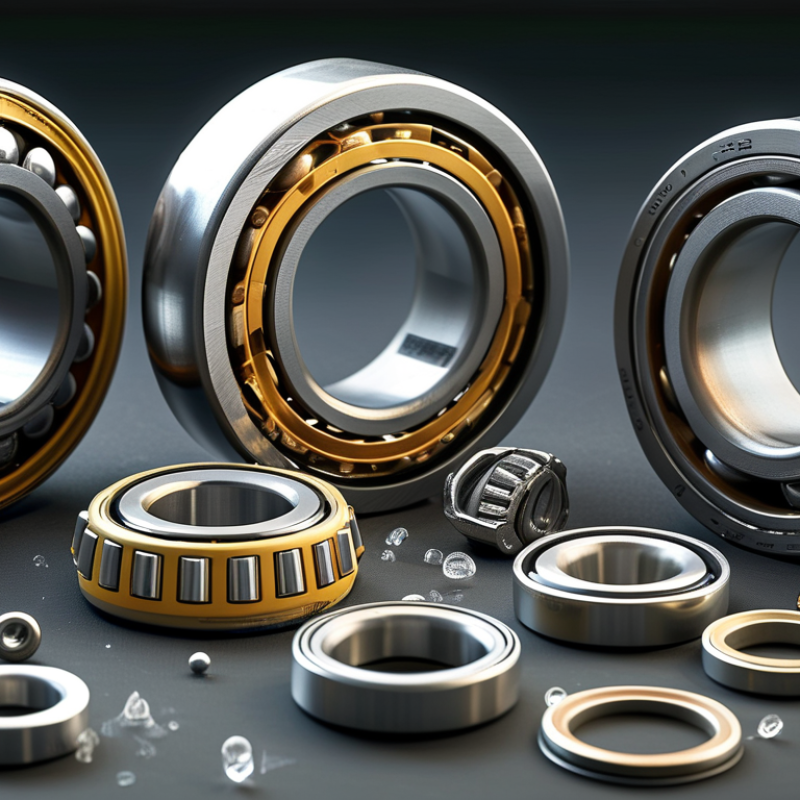
Understanding Thrust Ball Bearing Design and Operating Principles
How to Choose the Right Thrust Ball Bearing?
A thrust ball bearing is designed to carry axial load, not heavy radial force. Its balls run between raceways arranged around the shaft axis. This geometry allows smooth rotation when pressure acts in one direction. Some designs handle axial load from both directions. Check this detail before selection.
During operation, the balls transfer force through small contact areas. This creates friction, heat, and fatigue near the raceways. A bearing with a higher speed rating may need better lubrication and heat control. Grease suits many moderate-speed machines, while oil can remove heat more effectively. The correct shaft and housing fits also matter. Excessive looseness can cause movement. A tight fit may reduce internal clearance. I have seen clean calculations fail when installation was careless.
Tips: Measure the actual axial load, speed, temperature, and available space. Check whether the load reverses during operation. Keep the bearing faces parallel, because misalignment creates uneven contact. Protect the raceways from dust and moisture. Use the recommended lubricant quantity. Too much grease can raise temperature quickly. Inspect mounting surfaces for burrs. Small defects become loud vibration later.
Choose a bearing with suitable static and dynamic load ratings. Static capacity helps prevent permanent dents during startup or shock loading. Dynamic capacity relates more closely to fatigue life under continuous rotation. Operating conditions are rarely perfect. Recheck the selection after testing, especially if noise, heat, or vibration exceeds expectations.
How to Choose the Right Thrust Ball Bearing? - Understanding Thrust Ball Bearing Design and Operating Principles
| Selection Dimension | Design or Operating Principle | What to Check | Suitable Choice or Practice | Common Limitation or Risk |
|---|---|---|---|---|
| Load Direction | Thrust ball bearings are primarily designed to support axial loads acting along the shaft axis. | Confirm whether the load is purely axial or includes a radial component. | Use a thrust ball bearing when the axial load is dominant and radial load is negligible. | A conventional thrust ball bearing should not be used as the main support for substantial radial loading. |
| Single-Direction or Double-Direction Thrust | Single-direction designs support axial load in one direction. Double-direction designs support axial load in both directions. | Identify the direction and reversals of the operating thrust load. | Select a single-direction bearing for one-way thrust and a double-direction bearing for alternating or bidirectional thrust. | Using a single-direction bearing against reverse thrust can cause skidding, raceway damage, or premature failure. |
| Static Axial Load | Static capacity indicates the load a stationary or slowly rotating bearing can withstand without excessive permanent deformation. | Compare the maximum stationary or shock load with the published basic static load rating. | Choose a bearing with adequate static-load margin for installation loads, impacts, and standstill conditions. | Insufficient static capacity may create indentations in the raceways, producing noise and vibration during operation. |
| Dynamic Axial Load | Dynamic capacity is used to estimate fatigue life under repeated rolling contact and rotating conditions. | Calculate the equivalent axial load and required rating life for the duty cycle. | Use the bearing load rating and operating speed to verify the required service life. | A rating-based life calculation does not fully predict damage caused by contamination, poor lubrication, or misalignment. |
| Speed Requirement | Thrust ball bearings generate heat through rolling contact, sliding, lubricant friction, and cage movement. | Check the reference or limiting speed against actual rotational speed, load, lubrication, and cooling conditions. | Use a design intended for the required speed and reduce friction through correct lubrication and preload control. | High speed combined with heavy thrust can cause excessive temperature rise, lubricant breakdown, or cage instability. |
| Bearing Arrangement | A thrust bearing normally requires a separate radial bearing when the shaft is subject to radial forces. | Review the complete shaft-support arrangement, not only the thrust-bearing position. | Pair the thrust bearing with an appropriate radial bearing when combined loads are present. | Allowing the thrust bearing to carry unplanned radial load can increase contact stress and reduce operating life. |
| Washer and Shoulder Support | Thrust bearings transfer force through shaft washers, housing washers, and rolling elements. | Verify washer flatness, shoulder geometry, support diameter, and surface hardness. | Provide rigid, flat, square, and properly supported seating surfaces for both washers. | Poor support can distort the washers, concentrate load, and produce uneven raceway contact. |
| Alignment | Standard thrust ball bearings generally require the shaft and housing surfaces to remain accurately aligned. | Measure angular misalignment, shaft deflection, and housing deformation under load. | Use self-aligning arrangements only when the bearing design and application specifically permit them. | Misalignment can cause uneven load distribution, edge stress, sliding, and accelerated wear. |
| Lubrication | Lubricant separates contacting surfaces, reduces friction, removes heat, and protects against corrosion. | Consider speed, load, temperature, relubrication access, and compatibility with seals or surrounding materials. | Use an appropriate grease or oil quantity and follow a controlled lubrication interval. | Too little lubricant can cause wear and overheating; too much grease can also raise operating temperature. |
| Operating Temperature | Temperature affects lubricant viscosity, clearance, material properties, and dimensional stability. | Evaluate normal temperature, start-up temperature, heat transfer, and possible temperature peaks. | Select suitable materials and lubricant for the complete temperature range. | Excessive heat may reduce lubricant life, lower hardness, or cause dimensional changes. |
| Contamination and Environment | Particles and moisture can indent raceways, damage rolling surfaces, and degrade lubricant. | Assess dust, water, chemicals, washdown exposure, and the effectiveness of external sealing. | Use clean handling practices, effective shielding or sealing, and corrosion-resistant protection where required. | Thrust ball bearings are sensitive to contamination because small rolling contacts carry concentrated loads. |
| Installation and Fit | Correct fits guide the rotating ring and prevent unwanted creep while allowing the required thermal movement. | Check shaft and housing tolerances, mounting direction, contact surfaces, and installation force. | Apply force only to the ring being fitted and keep the bearing, washers, and seats clean. | Pressing through the rolling elements can brinell the raceways and create immediate latent damage. |
| Preload and Clearance | Axial setting influences stiffness, noise, load distribution, and friction. | Determine whether the application requires clearance, controlled preload, or a spring-supported arrangement. | Use only the preload needed to maintain contact and control movement under the full operating condition. | Excessive preload increases heat and friction; excessive clearance can cause vibration and impact loading. |
| Cage and Material Considerations | The cage spaces the balls, guides their motion, and helps maintain stable rolling-element circulation. | Consider speed, temperature, lubricant chemistry, load variation, and electrical or corrosion requirements. | Choose cage and ring materials that are compatible with the application environment and duty cycle. | A material suitable for ordinary conditions may be unsuitable for high temperature, corrosive, or electrically exposed service. |
| Verification Before Purchase | Correct selection depends on the combined effect of load, speed, temperature, mounting, lubrication, and environment. | Prepare the maximum axial load, speed, temperature range, duty cycle, available space, shaft size, and required life. | Compare the complete application data with the bearing catalogue ratings and dimensional requirements. | Selecting by bore diameter alone can result in inadequate load capacity, speed capability, or installation support. |
Related Posts
-
2026 Best Roller Bearing Types for Enhanced Performance and Durability?
-
China Best Roller Bearing Options for Global Buyers?
-

How to Choose the Right Spherical Roller Bearing for Your Application?
-

2025 How to Choose High Quality Bearings for Optimal Performance
-
Why Choose Miniature Ball Bearings for Your Projects?
-
Top 5 Essential Pillow Block Bearings for Optimal Machinery Performance
-

Phone
-

E-mail
-

Whatsapp
-

Wechat
Wechat
