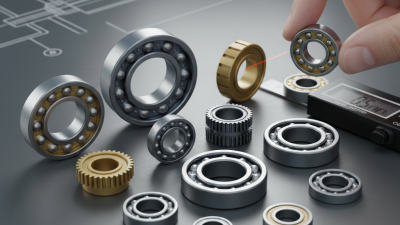
Choosing Germany Made Bearings in 2026 requires more than trusting a country label. The right bearing must match the load, speed, temperature, lubrication, and housing conditions. A compact deep-groove bearing may suit an electric motor, while a tapered roller design can handle combined loads. Check dimensions, clearance class, seal type, and operating limits against the equipment manual. Small differences matter. A bearing that fits physically can still fail early if it is misaligned or poorly lubricated.
Start with the application, not the brochure. Ask suppliers for traceable part numbers, material and heat-treatment details, test documentation, and warranty terms. Confirm whether “made in Germany” describes actual manufacturing or only a brand’s origin. That distinction deserves scrutiny. Compare lifecycle costs, including downtime, installation labor, energy use, and replacement access. For critical machinery, request engineering support and verify recommendations against measured operating data. In a workshop, unusual heat, vibration, or rising noise can signal a mismatch; record these observations after installation. For 2026 purchasing, check lead times and the availability of replacement units, not just the quoted price. No catalogue replaces a clear duty profile. Even careful buyers can overlook changing loads or contamination. Document the assumptions behind your choice, then review them when operating conditions change.
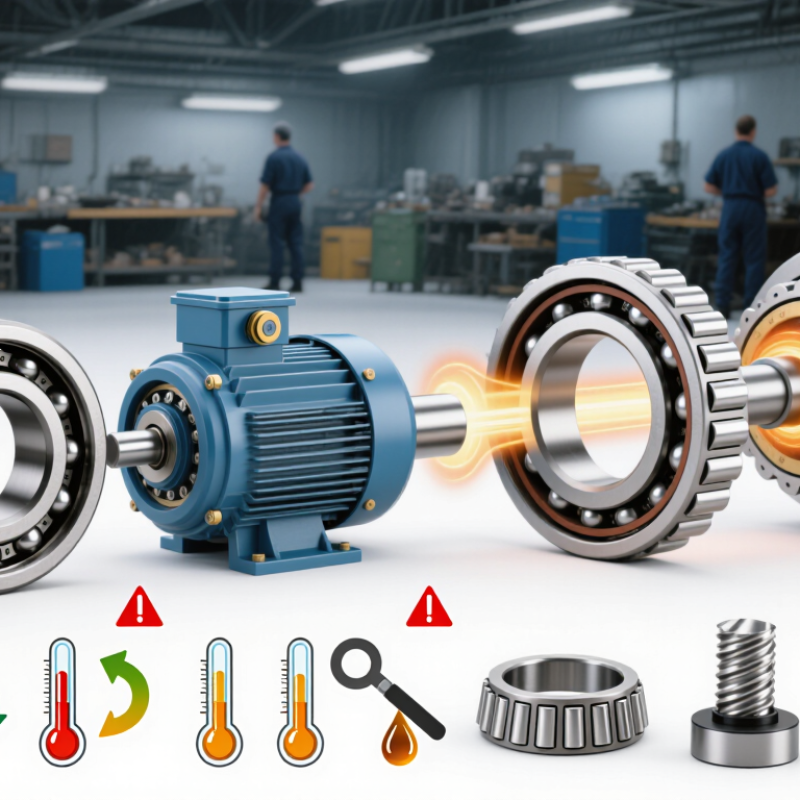
Before comparing Germany-made bearings in 2026, define the conditions they must handle. Record radial and axial loads, including brief shocks during start-up or direction changes. Note shaft speed, operating hours, and how often the machine stops. A bearing near a hot motor may face different temperatures from one in a cool, clean enclosure. Small details matter.
Tips: Write down the real operating range, not just the average. Check for dust, moisture, washdown, vibration, and limited lubrication access. If measurements vary, mark the uncertainty rather than guessing.
Then confirm the required bore, outer diameter, width, fit, and available installation space. Set practical limits for noise, vibration, accuracy, and service life. A duty cycle is rarely perfectly steady; production changes can make an apparently safe load less predictable. It is easy to focus on a catalogue rating and overlook poor alignment or an unsuitable lubricant. Compare the bearing data with the machine’s actual conditions, and ask a qualified engineer to review assumptions that could affect safety or reliability.
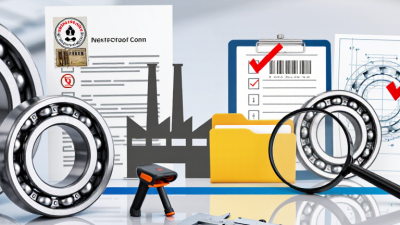
For German-made bearings, verify the factory, not just the supplier’s address. Request a written origin declaration, the production-site address, and batch records linking the bearing to its manufacturing steps. Ask where rings were machined, heat-treated, and assembled. Match lot numbers on the product, inspection report, and invoice. Paper is not proof. Origin rules can vary by destination, so confirm the applicable requirements with your customs specialist.
Check the technical evidence against the specification. ISO 281 covers dynamic load ratings and rating life; ISO 492 defines dimensional tolerances for radial bearings. Request test results for the exact bearing type and batch, not a generic catalogue sheet. Review the manufacturer’s quality certificate, including its scope, site, and validity. The ISO Survey of Management System Standard Certifications reported 1,265,216 ISO 9001 certificates across 190 countries in 2022. That scale makes one point clear: a certificate alone does not establish German origin or bearing quality. Check the batch. I would also compare stated tolerances with measured values; paperwork can look complete while leaving gaps.
How to Choose Germany Made Bearings in 2026
Choosing a Germany-made bearing in 2026 should start with the load, speed, and available space—not the country label alone. Deep-groove ball bearings suit many radial loads and moderate axial loads. Angular-contact designs handle combined loads, while tapered rollers can support heavier radial and axial forces. Check shaft fit, housing tolerance, and expected misalignment before selecting. Small details matter.
Material choice depends on operating conditions. Standard bearing steel works for many clean, controlled applications. Stainless steel may help where moisture or washdown is present, though it is not a universal upgrade. For heat, shock, or contamination, compare documented operating limits instead of relying on a broad material description. Confirm origin and batch traceability in the technical documents.
Tips: Match lubricant to speed, temperature, and sealing. Grease is convenient for many sealed units; oil may suit higher speeds or heat, but needs a compatible delivery method. Avoid mixing greases without checking compatibility. Keep bearings dry in storage, and remember that even a sound specification can fail after rough installation.
| Application Need | Bearing Type to Consider | Typical Material Options | Lubrication Guidance | Key Selection Checks |
|---|---|---|---|---|
| General-purpose motors, pumps, and compact machinery | Deep-groove ball bearing; suitable for radial loads and moderate axial loads in both directions | Through-hardened bearing steel is common. Stainless steel may be considered where corrosion resistance is important. | Sealed, grease-lubricated units are common for low-maintenance service. Use oil where the application and operating conditions call for it. | Check bore and outside dimensions, load, speed, fit, sealing, noise requirements, and operating temperature. |
| Spindles and equipment requiring combined radial and axial load support | Angular-contact ball bearing; often arranged as a pair when axial loads act in both directions | Through-hardened bearing steel is common. Hybrid designs use steel rings with silicon-nitride rolling elements. | Grease can suit moderate speeds and simpler arrangements; oil or an oil-air system may be specified for high-speed spindle service. | Confirm contact angle, arrangement, preload, precision class, speed limits, and heat-removal needs. |
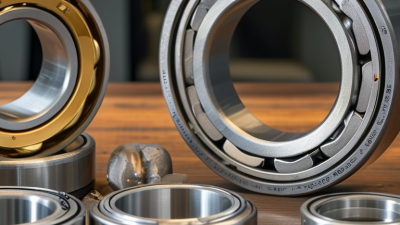
| Heavy radial loads with limited axial load | Cylindrical roller bearing; some designs allow axial displacement within the bearing arrangement | Through-hardened bearing steel is common; cage material varies with design and operating conditions. | Grease or oil may be used. Oil lubrication can help with heat removal in demanding, high-speed, or heavily loaded applications. | Check bearing design, clearance, alignment, load direction, shaft movement, and lubrication delivery. |
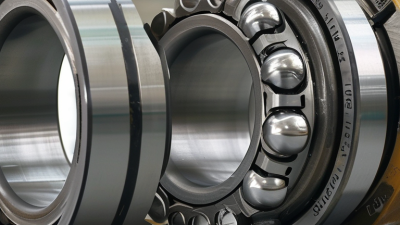
| Heavy loads where shaft or housing misalignment may occur | Spherical roller bearing; designed to accommodate misalignment within its permitted limits | Through-hardened bearing steel is common. Material and heat-treatment specifications should match the duty. | Grease is common for many standard arrangements; circulating oil may be appropriate for higher heat or continuous-duty service. | Check radial and axial loads, allowable misalignment, internal clearance, mounting method, and relubrication access. |
| Combined radial and axial loads in gearboxes, wheel ends, and similar arrangements | Tapered roller bearing; commonly arranged in opposing pairs to support axial loads in both directions | Through-hardened bearing steel is common. Confirm that material and heat treatment suit the load and service environment. | Grease or oil depends on the assembly. Gearbox applications often use the system’s specified oil; grease is used in suitable sealed arrangements. | Check load direction, pair arrangement, adjustment or end play, mounting, and lubricant compatibility. |
| Predominantly axial loads | Thrust ball or thrust roller bearing, selected for load level and whether axial load acts in one or both directions | Hardened bearing steel is common; corrosion-resistant or other specialized materials may be available for specific environments. | Follow the design’s lubrication requirements and ensure lubricant reaches the rolling contacts; do not assume a radial-bearing lubrication arrangement applies. | Check axial load, speed, alignment, support surfaces, and whether radial loads also need separate support. |
| Corrosive, washdown, or moisture-exposed environments | Select a bearing type based on the load first, then specify corrosion-resistant construction and suitable seals | Stainless bearing steels, protective coatings, or ceramic rolling elements may be options; corrosion resistance and load capacity vary by material and design. | Use lubricant compatible with the environment, seals, and operating temperature. Establish inspection and relubrication intervals. | Assess water or chemical exposure, cleaning method, sealing, corrosion resistance, load, and maintenance access. |
| High-speed or electrically sensitive applications | Choose the appropriate ball or roller bearing for the load; hybrid or electrically insulating designs may be considered where justified | Hybrid bearings typically combine steel rings with silicon-nitride rolling elements. Confirm the complete bearing specification for the intended electrical duty. | Use the lubricant and quantity specified for the speed, load, and temperature. Excess grease can increase churning and heat. | Check manufacturer-rated speed for the exact design, cage, seals, preload, lubricant, and mounting conditions. |
Germany-made purchasing check: Verify the stated country of origin and manufacturing documentation for the specific bearing. Bearing type, dimensions, material, clearance, precision, seals, and speed ratings should be confirmed from the product specification; they are not determined by country of manufacture alone. Operating limits depend on the exact design, fit, load, lubrication, and cooling conditions.
Choosing Germany-made bearings in 2026 means comparing supplier support and delivery, not just the unit price. Ask where stock is held, how quickly an engineer can answer alignment or lubrication questions, and what lead time applies to urgent orders. Request written service response times. Small details matter.
Availability deserves evidence. The World Bank’s 2023 Logistics Performance Index ranked Germany fourth globally, with a score of 4.1. That measures national logistics performance, not an individual supplier’s inventory. Ask for recent on-time delivery figures and confirm whether critical sizes are stocked near your plant. An online listing may still mean weeks of waiting.
Compare total cost across the expected service interval: purchase price, freight, installation hours, lubrication, replacement labor, and downtime exposure. Eurostat reported 2023 hourly labor costs of €41.3 in Germany, compared with an EU average of €31.8. This is not a maintenance-rate estimate, but service hours can materially change the comparison. Test two quotes against a delayed-delivery scenario. It may expose gaps. Treat forecast service life as an estimate, not a promise.
When choosing Germany-made bearings in 2026, check the documents as carefully as the product. Request a certificate of conformity, material details, dimensional tolerances, and clear batch or serial traceability. Match the markings on the bearing and packaging to the paperwork. Confirm that stated test methods and standards fit your application; a certificate alone does not prove every unit will perform well. Paperwork can look tidy and still leave gaps.
Tips: Check lot numbers. Keep the documents with your purchase record. Ask who performed each test.
Validate performance under realistic operating conditions. Measure noise, vibration, and temperature during a controlled run, then compare results with the supplier’s stated limits. Check lubrication and fit, too; an incorrect housing or shaft can distort results. If possible, test a sample before placing a large order. Record the load, speed, ambient temperature, and run time so another technician can repeat the test. One short trial may miss wear that appears later, so review service data after installation. No check removes all uncertainty, but clear records and repeatable tests make decisions more reliable.