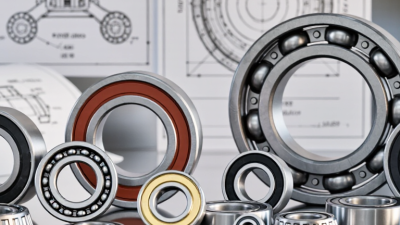
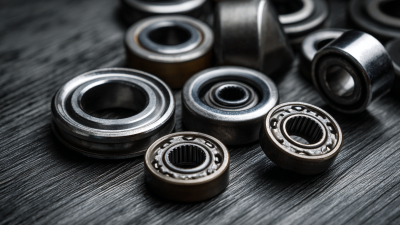
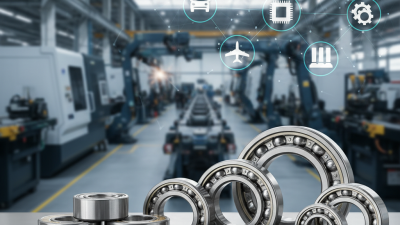
Choosing a Roller Bearing Factory in 2026 is a practical decision with long-term consequences. A bearing may look like a small steel component, yet its surface finish, internal clearance, and heat treatment can affect noise, operating temperature, and service life. One uneven raceway can matter. Buyers need more than a polished catalog or a low quoted price.
A reliable supplier should be able to explain how it controls production, verifies dimensions, and handles quality problems. Ask for relevant test records, material traceability, and clear inspection criteria. If possible, review sample bearings under conditions similar to your application. A caliper reading alone cannot reveal every issue. Manufacturing capacity also deserves careful attention: can the factory meet your required tolerances, batch size, and delivery schedule without changing specifications? Some answers sound convincing but remain vague. That is worth noticing.
This guide outlines how to assess factories, compare technical capabilities, and ask useful questions before placing an order. It also considers communication, customization, quality documentation, and after-sales support. No checklist can guarantee a perfect supplier, and factory claims should be verified rather than assumed. A site visit or independent inspection may expose details that a brochure misses, such as inconsistent labeling or unclear process records. The right choice depends on your equipment, operating environment, and risk tolerance. Take time to compare evidence, not just promises.
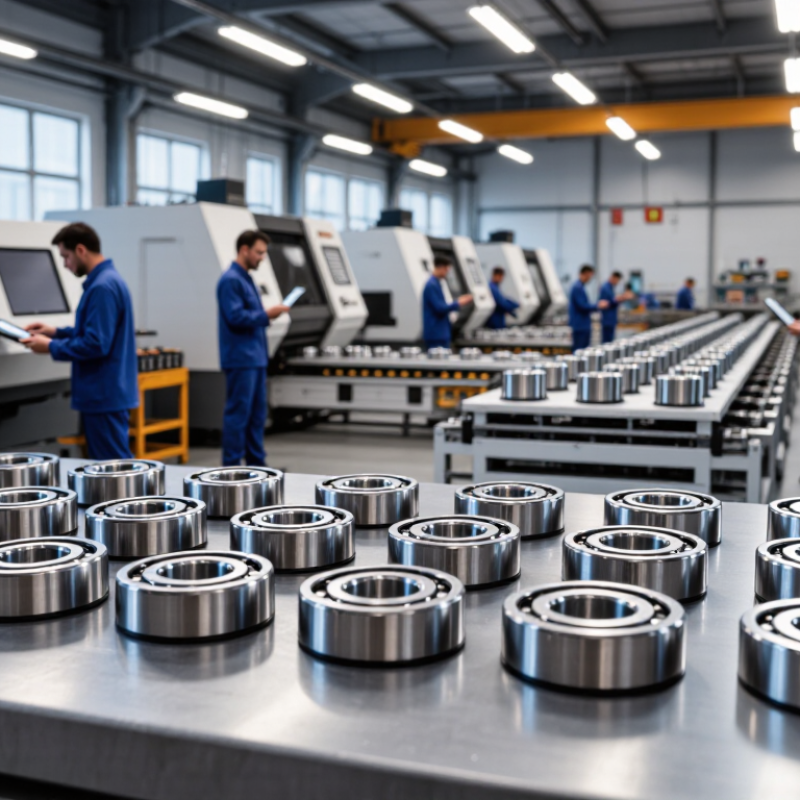
Before contacting a roller bearing factory, define the loads and motion the bearing must handle. Record radial and axial loads, shaft speed, duty cycle, and expected service life. Include peak loads, not just normal running values. A conveyor may run steadily, then face a sudden jolt when a loaded package lands.
Describe the environment with specific details. Note operating temperatures, dust or moisture, cleaning routines, and available lubrication. Measure the shaft and housing fits, and flag any misalignment or limited installation space. Small details matter. A bearing near a hot motor, for example, may need different clearance than one in a cool, clean room. Real measurements are better, though they are not always available; mark estimates clearly rather than presenting them as facts.
These requirements help you assess whether a factory can explain its proposed bearing’s suitability, materials, tolerances, and testing. Ask how the design handles your actual speed and load combination, not merely its maximum rated load. One detail is easy to miss: frequent starts and stops can create conditions unlike continuous operation. Recheck assumptions with maintenance staff, too. Their notes about noise, lubricant changes, or recurring wear may be imperfect, but they can reveal operating conditions the original specification overlooked.
Compare a factory’s bearing experience with your actual application. A supplier serving high-speed motors may not understand heavy-load conveyor requirements. Ask how engineers select steel grades, heat treatment, cage designs, and tolerances. Request examples of similar production runs, not just polished samples. Details matter. Check whether technical staff can explain failure risks in clear terms, including what they cannot guarantee.
Inspect the equipment and the process behind each bearing. Look for calibrated measuring instruments, controlled grinding equipment, and traceable inspection records. Ask how the factory monitors temperature during heat treatment and checks raceway finish after grinding. A clean production line helps, but it proves little by itself. Review process documents and sample inspection reports. If possible, observe a routine production run rather than a staged demonstration. Some records may be imperfectly organized; note that, and ask how gaps are corrected.
Tips: Ask for a process flow, inspection frequency, and sample measurement data. Confirm how nonconforming parts are isolated. Compare answers across factories, then verify claims against documents. One visit rarely tells the whole story.
How to Choose a Roller Bearing Factory in 2026
A dependable roller bearing factory should explain how it controls materials, machining, heat treatment, and final inspection. Ask for its current quality certificates, then check the certificate scope and issuing body. A certificate alone is not proof of consistent production. Request sample inspection records for the bearing type you plan to buy. Look for measured values, acceptance limits, and clear links to the production batch. Details matter.
Testing should reflect real operating conditions. Ask how the factory checks dimensions, runout, hardness, noise, and vibration. Find out which tests are performed on every bearing and which use sample batches. Request a test report tied to a specific lot, not just a blank template. Traceability should connect the finished bearing to its material batch, production date, and inspection results. I would not treat a polished audit sheet as proof; paperwork can look better than the shop floor, so compare records with a factory visit when possible.
Tips: Ask to follow one bearing lot from incoming steel to final packaging. Check that labels match the inspection documents. If an answer is vague, ask for a real example. It may feel awkward, but clarity now can prevent costly surprises later.
Use this checklist to compare factories. Confirm applicable requirements against the bearing drawing, purchase specification, and contract; acceptance limits are not universal.
| Evaluation area | What to verify | Relevant reference | Evidence to request | Assessment |
|---|---|---|---|---|
| Quality management | Check that the quality-management system covers the site and processes producing the quoted bearings. Verify certificate scope and validity with the issuing certification body. | ISO 9001:2015 | Current certificate, scope, latest audit findings, and corrective-action records. | To be verified |
| Drawing and dimensional control | Confirm inspection plans cover specified dimensions, tolerances, clearance or preload, and other drawing requirements. Results should identify the part and measurement equipment used. | ISO 492 for applicable radial rolling-bearing tolerances; product drawing and purchase specification | Sample inspection report, measurement plan, instrument calibration records, and a demonstration of the measurement process. | To be verified |
| Material control | Check material grade and required chemical and mechanical properties against the order. Confirm that incoming material records remain linked to production batches. | ISO 683-17:2014 for applicable ball and roller bearing steels; specified material grade and order requirements | Material test certificate, heat or melt identification, receiving inspection records, and rules for handling nonconforming material. | To be verified |
| Heat-treatment verification | Confirm that heat-treatment parameters and inspection methods are controlled to the product specification. Hardness limits and case-depth requirements, where applicable, must be defined by the drawing or agreed specification. | ISO 6508-1 for Rockwell hardness testing of metallic materials; applicable product specification | Heat-treatment batch records, hardness-test reports, equipment checks, and documented disposition of out-of-specification results. | To be verified |
| Bearing performance and rating data | Check that load ratings and rating-life calculations use the correct bearing designation, dimensions, and stated operating assumptions. A calculated rating is not, by itself, a guarantee of service life. | ISO 281, rolling bearings—dynamic load ratings and rating life | Calculation basis, product data sheet, design validation records, and any application-specific test results relevant to the order. | To be verified |
| Inspection and test capability | Review which checks are performed in-house and which are subcontracted. Confirm that methods, sampling plans, acceptance criteria, and measurement-system controls match the order. | Purchase specification; ISO 9001 monitoring and measurement controls | Inspection and test plan, sample reports, equipment list, calibration status, and subcontractor-control records. | To be verified |
| Product identification and traceability | Verify that the factory can trace a finished-bearing lot back through production and inspection records to relevant material batches, and can identify affected lots during a recall or quality investigation. | ISO 9001:2015, clause 8.5.2, where traceability is required | Example lot record, label or marking format, traceability procedure, record-retention period, and a demonstrated trace exercise. | To be verified |
| Nonconformity and corrective action | Check how defects are contained, investigated, corrected, and reviewed for recurrence. Confirm that customer complaints can be linked to affected production lots. | ISO 9001:2015, including control of nonconforming outputs and corrective action | Redacted nonconformity and corrective-action examples, complaint-response workflow, and escalation contacts. | To be verified |
| Packaging, storage, and delivery | Agree packaging, corrosion protection, handling, storage conditions, and shipment identification for the bearing type and transport route. Define these requirements in the order. | Product specification and agreed packaging and logistics requirements | Packaging specification, sample label, storage instructions, and shipment inspection records. | To be verified |
Note: Standards may be revised or replaced. Confirm the edition and applicability required for the contract, and set product-specific acceptance limits in the drawing or purchase specification.
Choosing a roller bearing factory in 2026 means checking production records, not relying on a polished tour. Ask for monthly output by bearing type, machine utilization, reject rates, and overtime levels. Capacity is not output. Compare quoted lead times with recent order-to-dispatch records for similar sizes and specifications. Ask how delays are communicated, and whether urgent orders would displace existing customers.
Supply resilience deserves equal scrutiny. Request a map of critical components, material sources, and backup suppliers, plus evidence of recent disruption plans. McKinsey’s 2020 global supply-chain survey found that 93% of surveyed leaders planned to increase resilience. That figure signals a broad concern, not proof that any individual factory is prepared. The 2024 MHI Annual Industry Report also found that 55% of surveyed organizations planned to invest more than $1 million in supply-chain innovation. Digital tracking helps, but it cannot replace available stock or qualified backup capacity.
During evaluation, ask the factory to walk through one delayed shipment: when did it spot the risk, what changed, and how quickly did it update the buyer? Check whether safety stock covers your actual bearing range, not just popular sizes. A small trial order can reveal packaging quality, inspection records, and response speed. Even a detailed audit has limits; demand changes, and forecasts are often wrong. Keep that uncertainty visible in your own purchasing plan.
When comparing roller bearing factories, look beyond the unit price. Ask for a quotation that separates bearing cost, tooling, packaging, and shipping. A low price may reflect a different steel grade, clearance, or inspection scope. Confirm that the proposed dimensions and load ratings match your application, not just the catalog description. Request inspection records for sample units, including measurements of bore and outside diameter. Small differences matter. They can affect fit, noise, and service life.
Technical support is easier to judge through specific questions. Ask how engineers handle lubrication, operating temperature, and unexpected vibration. Clear answers should refer to your actual conditions, not vague promises. Check whether the factory can share drawings, material documentation, and a practical process for investigating failures. Long-term reliability also depends on stable production and traceable batch records. Ask how changes to materials or processes are communicated. No checklist catches everything. A trial order can reveal issues that a polished presentation will not. Keep in mind that a factory may be responsive before an order and slower afterward; agree on response times and support responsibilities in writing.