Top 10 Machine Bearings: Best Types for Optimal Performance and Longevity
In the world of mechanical engineering, the role of machine bearings cannot be overstated. These critical components not only facilitate smooth motion but also enhance the overall performance and longevity of various machinery. As industry expert Dr. Emily Carter, a leading authority in tribology, once stated, "Choosing the right machine bearings is essential for maximizing efficiency and minimizing downtime."
With countless options available in the market, understanding the different types of machine bearings and their respective advantages is vital for professionals aiming to make informed decisions. This article will explore the top 10 machine bearings, focusing on the best types that contribute to optimal performance and durability. By examining critical factors such as load capacity, friction characteristics, and environmental resistance, we aim to equip readers with the knowledge necessary to select the most suitable bearings for their specific applications, thus ensuring a seamless operation in their machinery.
From traditional ball and roller bearings to innovative ceramic and magnetic solutions, each type offers unique benefits tailored to various operational demands. This comprehensive overview will serve as a valuable resource for engineers, maintenance personnel, and decision-makers seeking to enhance their understanding of machine bearings and their impact on machinery effectiveness.
Key Considerations for Selecting the Best Machine Bearings in 2025
When selecting the best machine bearings in 2025, several key considerations must be taken into account to ensure optimal performance and longevity. Firstly, the type of load that the bearing will encounter is crucial. Bearings are designed for specific load conditions—radial, thrust, or a combination of both. Understanding the application and the forces at play will help in selecting a bearing that can withstand these stresses without premature failure.
Secondly, material selection plays a significant role in bearing performance. In 2025, advancements in materials such as ceramic and advanced polymers may offer better fatigue resistance, reduced weight, and enhanced corrosion resistance. Incorporating these materials can lead to substantial improvements in efficiency and lifespan. Additionally, the operating environment—such as temperature, moisture, and exposure to contaminants—should be carefully evaluated when choosing bearings. Proper seals and lubrication options tailored to the specific conditions will further enhance bearing performance and reliability.
Top 10 Machine Bearings: Best Types for Optimal Performance and Longevity
| Bearing Type |
Material |
Load Capacity (kg) |
Speed Rating (RPM) |
Temperature Range (°C) |
Lubrication Type |
| Deep Groove Ball Bearing |
Steel |
1500 |
6000 |
-20 to 120 |
Grease |
| Angular Contact Bearing |
Ceramic |
1000 |
8000 |
-40 to 150 |
Oil |
| Spherical Roller Bearing |
Steel |
2000 |
4000 |
-20 to 120 |
Grease |
| Needle Roller Bearing |
Steel |
800 |
10000 |
-30 to 120 |
Oil |
| Tapered Roller Bearing |
Steel |
2500 |
5000 |
-20 to 130 |
Grease |
| Self-Aligning Bearing |
Steel |
1800 |
3000 |
-20 to 100 |
Grease |
| Thrust Ball Bearing |
Brass |
1000 |
4000 |
-20 to 120 |
Oil |
| Air Bearings |
Composite |
N/A |
200000 |
-40 to 200 |
N/A |
| Magnetic Bearings |
Magnetic |
N/A |
500000 |
-50 to 300 |
N/A |
Overview of Top 5 Bearing Types for Performance and Reliability
When it comes to ensuring optimal performance and reliability in machinery, the choice of bearings is crucial. The top five bearing types that stand out for their effectiveness include ball bearings, roller bearings, plain bearings, magnetic bearings, and fluid bearings. Each type serves distinct applications, providing unique advantages and limitations that cater to various operational demands.
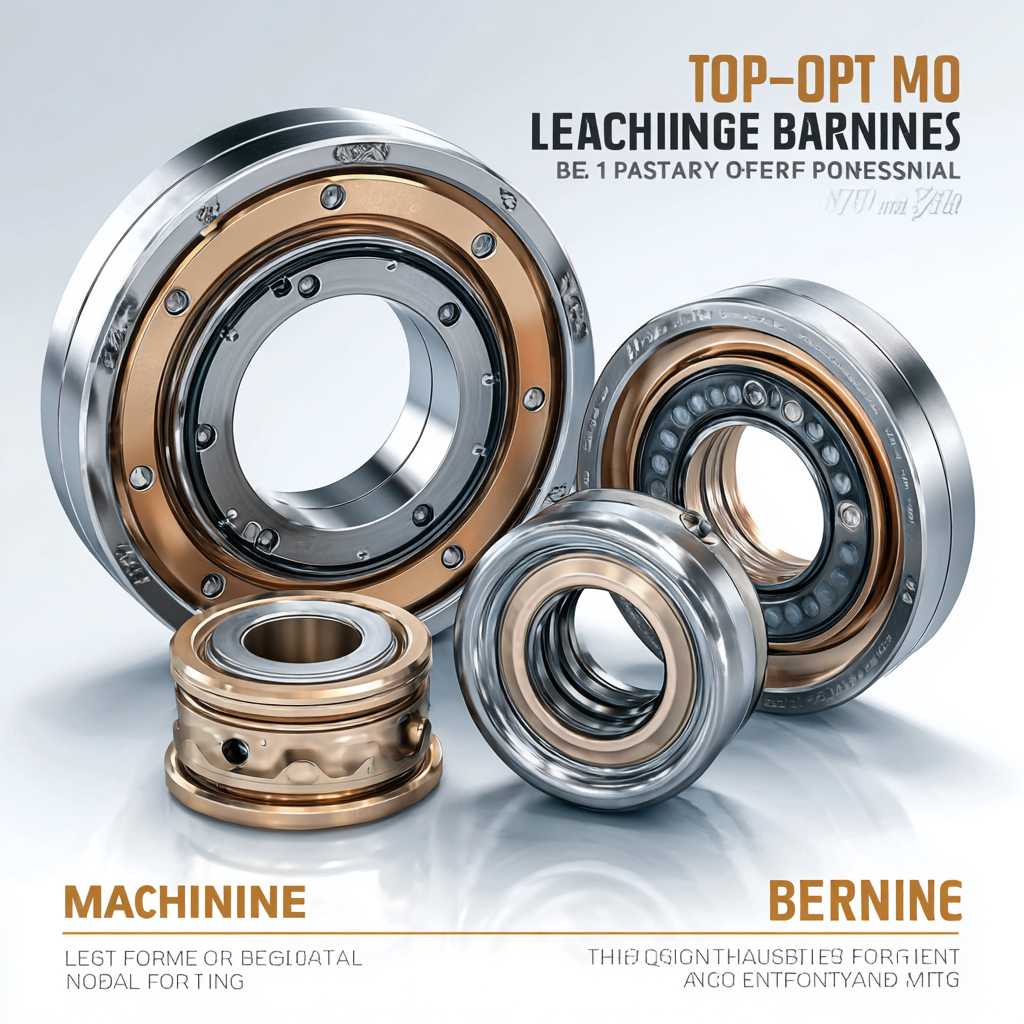
Ball bearings are famous for their versatility and reduced friction, making them ideal for high-speed applications. Roller bearings, on the other hand, handle heavier loads and are often preferred in industrial settings. Plain bearings offer simplicity and cost-effectiveness, suitable for low-speed applications with minimal maintenance requirements. In contrast, magnetic bearings eliminate physical contact and reduce wear, which is advantageous for precision machinery. Lastly, fluid bearings utilize a thin layer of liquid to support loads, providing excellent vibration dampening and low wear rates, making them a choice for high-precision environments.
In selecting the right type of bearing, considerations such as load capacity, speed, maintenance needs, and operating environment are essential to achieve not only performance but also longevity in machinery. Understanding these factors ensures that the most suitable bearing type is selected for optimal operational efficiency.
Comparative Analysis of Materials Used in Modern Machine Bearings
In modern machine design, the choice of bearing material significantly impacts performance and durability. Various materials such as steel, ceramic, and polymer are commonly used, each offering unique advantages. Steel bearings, for instance, are renowned for their strength and load-bearing capabilities, making them ideal for high-load applications. However, they can be susceptible to corrosion, which is a critical consideration in environments with moisture or chemicals.
Ceramic bearings are gaining popularity due to their lightweight and low friction characteristics. They provide excellent thermal conductivity and resistance to wear, resulting in extended service life. Moreover, they are non-magnetic and can withstand extreme temperatures, making them suitable for specialized applications. On the other hand, polymer bearings are favored for their corrosion resistance and low maintenance needs, making them an excellent choice for applications where lubrication is challenging.
Tips: When selecting bearings, consider the operational environment and potential contaminants that could compromise longevity. Regular maintenance checks can help identify wear early, ensuring optimal performance. Additionally, matching the bearing material to the application's specific dynamic requirements can prevent premature failure and enhance overall efficiency.
Innovative Technologies Enhancing Bearing Longevity in 2025
As we approach 2025, innovative technologies are set to redefine the landscape of machine bearings, enhancing their performance and longevity. Companies are increasingly focusing on advanced materials and lubrication systems that not only improve operational efficiency but also extend the lifespan of bearings. This shift is primarily driven by the need for enhanced durability in demanding applications, which is becoming crucial in various sectors including automotive, aerospace, and industrial machinery.
Recent trends indicate a significant growth in the plain bearing market, projected to reach approximately USD 23.9 billion by 2035, reflecting a compound annual growth rate (CAGR) of 5.9% from 2025 to 2035. The ongoing innovation in bearing technology, coupled with back-to-back testing by leading manufacturers, showcases a commitment to refining design and manufacturing processes. These improvements are expected to respond effectively to global pressures while balancing the necessity for serial production. As the industry races towards 2025, the emphasis on biocompatible materials is also transforming fields like orthopedics and dentistry, showcasing the expanding relevance of bearing technology in high-demand environments.
Future Trends in Machine Bearings: Sustainability and Efficiency
In the realm of machine bearings, future trends are increasingly leaning towards sustainability and efficiency. As industries strive to reduce their environmental impact, manufacturers are focusing on creating bearings that not only perform optimally but also are made from eco-friendly materials. Innovations in production processes are enabling the use of recycled materials without compromising quality, ensuring that the bearings meet rigorous performance standards while being responsible stewards of the environment.
Additionally, the push for efficiency is leading to the development of advanced bearing designs that enhance durability and reduce friction. Technologies such as low-friction coatings and precision-engineered surfaces extend the lifespan of bearings, resulting in less frequent replacements and lower resource consumption over time. As the demand for energy-efficient machinery grows, the future of machine bearings will likely see a convergence of sustainability and performance, paving the way for greener manufacturing practices and contributing to a more robust industrial ecosystem.