Top 10 Types of Machine Bearings You Should Know About?

Machine bearings play a critical role in various industrial applications. They facilitate movement and reduce friction, ensuring machinery operates efficiently. According to recent industry reports, the global bearing market is expected to reach $80 billion by 2026, driven by advancements in manufacturing and technology.

Understanding the different types of machine bearings is essential for maximizing equipment performance. From deep groove ball bearings to tapered roller bearings, each type serves a specific purpose and is tailored for various load conditions. A significant portion of machine failures can be traced back to inadequate bearing selection. Hence, choosing the right type of bearing is vital.

Incorporating AI technologies into the supply chain can enhance the procurement of machine bearings. The 2026 Canton Fair introduces AI-driven tools to help buyers find suppliers with the right certifications. This innovation is crucial in a market where precise components are a necessity. Today, the focus on optimizing efficiency is more important than ever. As technology evolves, the demand for robust and efficient machine bearings will continue to rise.
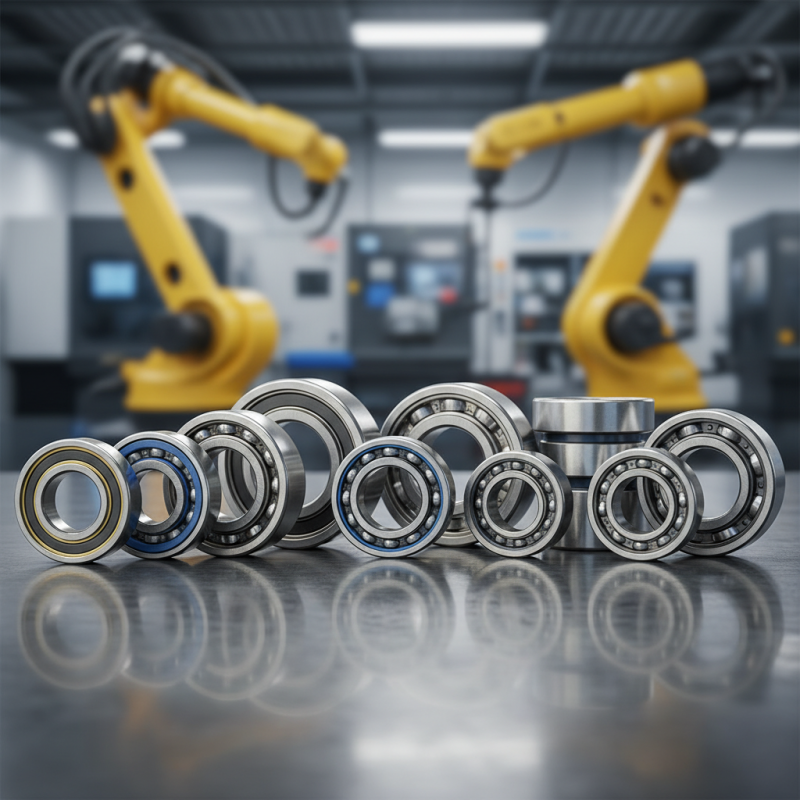
Top 10 Types of Machine Bearings You Should Know About?

Types of Ball Bearings: Features and Applications

Ball bearings are essential in machinery. They reduce friction between moving parts. Different types serve various applications. According to a recent industry report, the global ball bearings market is projected to reach $20 billion by 2025. This growth shows their importance in manufacturing and automotive sectors.

There are several types of ball bearings. Deep groove ball bearings are among the most common. They handle both radial and axial loads. This versatility makes them suitable for electric motors and HVAC systems. Angular contact ball bearings, on the other hand, can support high-speed applications. They are commonly used in gearboxes and machine tools. Each type has unique features that cater to specific needs.

Despite their advantages, choosing the right bearing isn't always straightforward. Some bearings wear out faster under certain conditions. Temperature fluctuations increase wear rates. Regular maintenance can help, but it requires commitment. Users must reflect on their application needs. Long-term performance should guide their choices. Understanding these nuances is crucial in avoiding premature failures.

Top 10 Types of Machine Bearings You Should Know About

Bearing Type Features Applications
Deep Groove Ball Bearing Versatile, supports radial and axial loads Electric motors, machinery
Angular Contact Ball Bearing Designed for high-speed applications, supports axial loads Spindles, gearboxes
Self-Aligning Ball Bearing Two rows of balls, self-aligns to shaft misalignment Shafts in agricultural machinery
Thrust Ball Bearing Supports axial loads, contains a set of balls Automotive applications, lifts
Cylindrical Roller Bearing High radial load capacity, low friction Heavy machinery, rolling mills
Spherical Roller Bearing Can handle misalignment, high load capacity Wind turbines, construction equipment
Tapered Roller Bearing Suitable for heavy loads, tapered shape to handle thrust Automotive hubs, railway axles
Needle Roller Bearing Compact size, high load capacity Automotive gearboxes, motorcycles
Magnetic Bearing Uses magnetic fields to support loads without contact High-speed machinery, turbomachinery
Fluid Bearing Uses a film of fluid to support loads, reduces wear High-speed applications, turbines

Understanding Roller Bearings: Variants and Uses

Roller bearings are essential components in various machinery. They support heavy loads and reduce friction. Understanding their variants helps in choosing the right type for specific applications. There are several designs, each suited for different functions.

Cylindrical roller bearings are popular in heavy-duty applications. They handle radial loads well. Their design allows for high-speed operation, but they can struggle with shock loads. Spherical roller bearings, on the other hand, can accommodate misalignment. They are often used in industrial machinery, but their complex design makes them costly and harder to maintain.

Tapered roller bearings excel in situations requiring both radial and axial support. They are widely used in automotive wheel hubs. However, improper installation can lead to premature wear. Thrust roller bearings are used to manage axial loads, yet they must be correctly aligned. Each type has its advantages and challenges. Understanding these intricacies is vital for efficient machinery operation.

Top 10 Types of Machine Bearings You Should Know About

This chart illustrates the top 10 types of machine bearings commonly used in various applications, highlighting their usage frequency based on industry data.

Exploring Pillow Block Bearings: Design and Benefits

Top 10 Types of Machine Bearings You Should Know About?

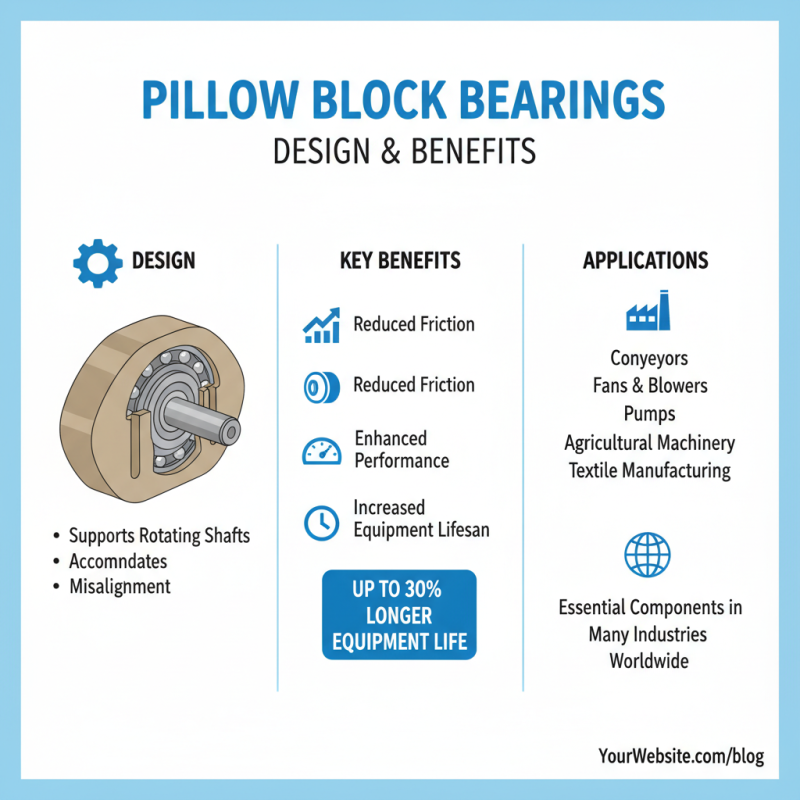
Pillow block bearings are essential components in many machinery applications. They provide support for rotating shafts while allowing for a degree of misalignment. This design reduces friction and enhances overall performance. According to a recent industry report, pillow block bearings can improve equipment lifespan by up to 30%.

The construction of pillow block bearings is notable. They typically consist of a mounted unit with a bearing inside. This allows for better load distribution and minimizes wear and tear. However, improper installation can lead to premature failure. Regular maintenance is crucial. Studies indicate that 70% of bearing failures are due to maintenance neglect.

In sectors like manufacturing and agriculture, the benefits of pillow block bearings shine. They can handle heavy loads and harsh conditions. This makes them versatile in different environments. Yet, users may not fully understand installation nuances. Awareness of potential pitfalls can lead to better usage. Some reports indicate that about 20% of users face performance issues with pillow block bearings due to improper alignment. Understanding the design and its benefits is vital for maximizing efficiency.

The Role of Spherical Bearings in Industrial Machinery

Top 10 Types of Machine Bearings You Should Know About?

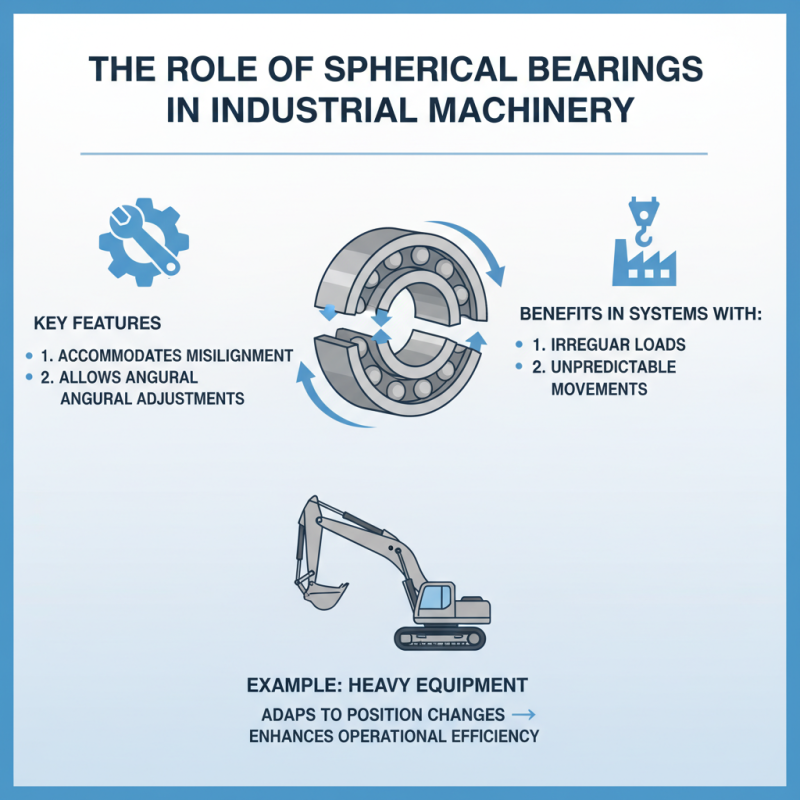
Spherical bearings play a crucial role in industrial machinery. They are designed to accommodate misalignment and angular adjustments. This unique feature is essential in systems that experience irregular loads and movements. For example, in heavy equipment, these bearings can adapt to changes in positioning, which enhances operational efficiency.

The construction of spherical bearings involves an inner ring that fits into a spherical outer ring. This allows for movement in multiple directions. They are often used in applications like cranes and construction equipment. However, they can be vulnerable to contaminants. Contamination can lead to premature wear and failure. Regular maintenance is critical to extend their lifespan.

Despite their advantages, using spherical bearings comes with challenges. Proper installation is essential for optimal performance. If misaligned, they can fail quickly. Operators need to monitor their condition frequently. This can be labor-intensive but is necessary for reliability. Understanding these aspects can help in choosing the right bearing for specific industrial needs.

Overview of Thrust Bearings: Types and Performance Metrics

Thrust bearings play a crucial role in numerous mechanical applications. They are designed to support axial loads. This means they handle forces acting along the axis of a rotating shaft. There are various types of thrust bearings, each with unique characteristics. Understanding these types can simplify equipment design and improve performance.

One common type is the ball thrust bearing. These bearings use balls to reduce friction. They are often used in low-speed applications. Another type includes roller thrust bearings. These provide a larger contact area, which distributes the load more evenly. However, they can be bulkier. Choosing the right type depends on specific performance metrics. Factors such as speed, load capacity, and material are important to consider.

Performance metrics can vary significantly. For instance, the dynamic load rating is one key metric. It helps determine how much weight the bearing can support while rotating. There's also static load rating, indicating how much weight it can withstand at rest. These ratings help ensure operational efficiency. However, the wrong choice may lead to premature failure. It’s crucial to involve a mix of expertise and thorough research.