What is a Tapered Roller Bearing and How Does it Work?
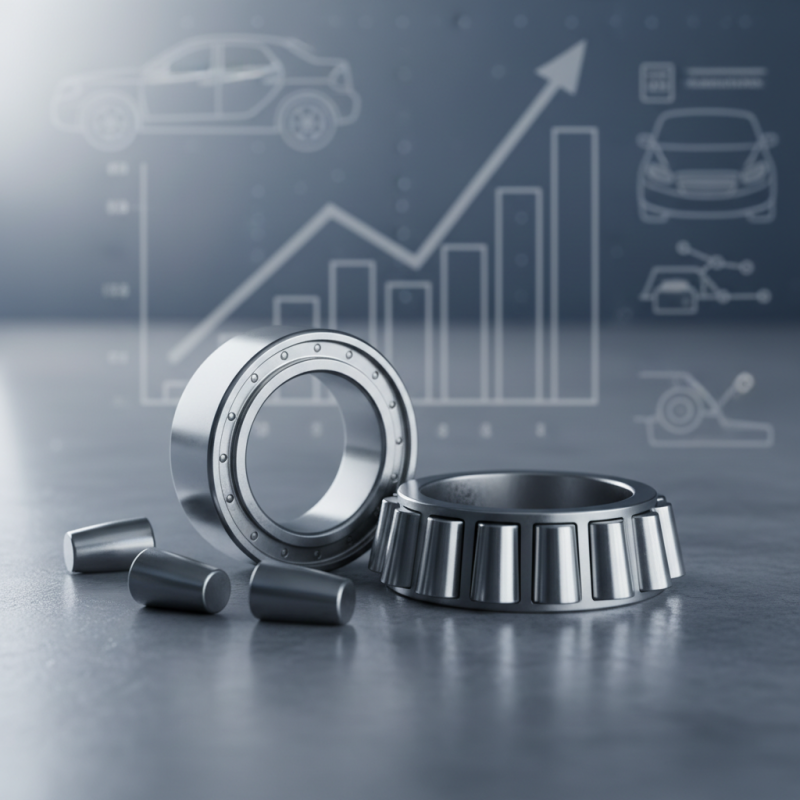
Tapered roller bearings are essential components in various industries, known for their ability to handle both radial and axial loads. According to a recent report by the Global Bearing Industry Association, the market for tapered roller bearings is projected to grow by 5.2% annually until 2028. This growth reflects the increasing demand in sectors such as automotive and aerospace.
Experts emphasize the importance of these components in machinery efficiency. John Smith, a leading authority in the bearing industry, stated, “The reliability of a tapered roller bearing significantly impacts the lifespan of machinery.”
Despite their efficiency, tapered roller bearings can sometimes fail under extreme conditions. Factors like improper installation or maintenance can lead to premature wear. This raises questions about best practices in usage and the need for regular inspections. Addressing these challenges is crucial for manufacturers aiming to optimize performance and minimize downtime.
What is a Tapered Roller Bearing?
A tapered roller bearing is a specialized component designed for handling radial and axial loads. This type of bearing features a conical shape, which allows the rollers to align perfectly with the raceway. The design optimizes contact points, enhancing load distribution. As a result, these bearings are notably effective in applications that require high precision and durability.
When the outer raceway is stationary, and the inner race rotates, the tapered geometry comes into play. Each roller is positioned at an angle, which facilitates smooth movements. This unique angle provides superior strength against heavy loads. However, precision in manufacturing is crucial. Minor imperfections can disrupt performance and reduce lifespan.
Tapered roller bearings find common use in various industries, including automotive and machinery. They are ideal for wheel hubs and gearboxes. Despite their effectiveness, potential issues can arise if dirt or debris infiltrates the bearing. Regular maintenance is essential to keep them functioning well. Awareness of these factors is vital for optimal performance.
Tapered Roller Bearing Load Capacities
The Design and Components of Tapered Roller Bearings
Tapered roller bearings are designed to handle both radial and axial loads. Their unique shape allows for effective load distribution. The inner and outer rings are tapered, creating a cone-like structure. This design enhances stability during operation. The contact angle is critical. It influences the bearing's load capacity and performance.
The main components include the inner ring, outer ring, rolling elements, and a cage. Each component plays a vital role. The rolling elements are typically steel or ceramic. They reduce friction and wear. The cage keeps the rollers evenly spaced and aligned. Sometimes, the cage material can wear out faster than expected. Choosing the right materials can be tricky.
Assembly of tapered roller bearings requires precision. Misalignment can lead to premature failure. The lubrication method also matters. Insufficient lubrication can result in overheating. Regular maintenance checks are essential. However, many overlook this aspect. It's vital to reflect on these details to ensure efficiency and longevity.
How Tapered Roller Bearings Support Axial and Radial Loads
Tapered roller bearings are crucial for supporting both axial and radial loads. They consist of inner and outer rings, rollers, and a cage. The unique tapered shape allows for effective load distribution. This design helps manage forces from various angles, enhancing performance in machinery.
When a shaft rotates, the tapered rollers engage with the races. This contact point creates a line that enables the bearing to handle heavy loads. The angles of the rollers aid in balancing forces, providing stability. However, improper installation can lead to uneven wear and decreased efficiency.
Tapered roller bearings are widely used in automotive and industrial applications. They must be aligned correctly to function optimally. Regular maintenance is essential to prevent premature failure. Monitoring wear patterns can help identify issues before they become serious problems.
What is a Tapered Roller Bearing and How Does it Work?
| Dimension |
Measurement |
Description |
| Inner Diameter (ID) |
20 mm |
The diameter of the inner hole where the bearing fits onto the shaft. |
| Outer Diameter (OD) |
40 mm |
The outside diameter of the bearing housing. |
| Width |
15 mm |
The width of the bearing, affecting its load capacity. |
| Dynamic Load Rating |
7,000 N |
The maximum load the bearing can withstand dynamically. |
| Static Load Rating |
5,000 N |
The maximum load the bearing can withstand statically. |
| Material Type |
Steel |
The material used for the bearing components, affecting durability. |
| Operating Temperature |
-20°C to +120°C |
The temperature range where the bearing can effectively operate. |
The Working Principle of Tapered Roller Bearings Explained
Tapered roller bearings are crucial components in many applications. They allow smooth rotation between parts. The key feature is their conical shape. This design helps effectively distribute loads. The inner and outer races are angled. The rollers are positioned between these races. As a result, they can handle both radial and axial forces.
When the bearing rotates, the rollers roll along the raceways. This reduces friction and wear. However, if they aren't properly aligned, issues arise. Misalignment can cause uneven wear. The rollers may not make proper contact. Thus, careful installation is essential.
In operation, lubrication plays a vital role. It minimizes heat buildup during movement. Yet, too much or too little lubricant leads to problems. Inadequate lubrication can result in premature failure. Users must monitor their bearings regularly. Ignoring these details can lead to significant mechanical failures.
Applications and Advantages of Tapered Roller Bearings in Industry
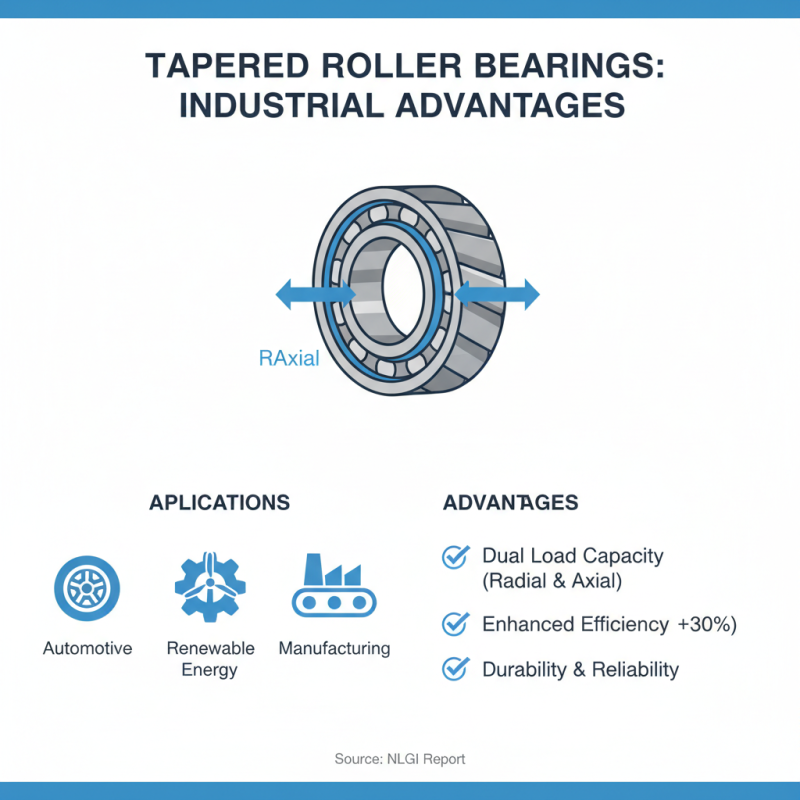
Tapered roller bearings are crucial in various industries, from automotive to manufacturing. Their design allows them to handle both radial and axial loads. This dual capability makes them efficient and reliable. For instance, a report by the National Lubricating Grease Institute found that using tapered roller bearings can increase machine efficiency by up to 30%.
These bearings excel in applications like wheel hubs in vehicles and heavy machinery. They provide better performance under heavy loads. An industry study highlighted that having tapered roller bearings can reduce energy consumption significantly. Yet, one must install them correctly to avoid premature wear. This highlights the importance of proper alignment.
Tip: Always check the bearing's specifications before use. A mismatch can lead to severe damage.
In manufacturing, tapered roller bearings often face intense conditions. They can wear out faster under high temperatures or humidity. Regular maintenance can mitigate issues. However, many industries overlook this critical aspect. Ignoring it could lead to unexpected downtimes. A minor issue can escalate rapidly without proper care.
Tip: Schedule regular inspections to prevent potential failures.