What is Insert Bearing and How Does It Work?
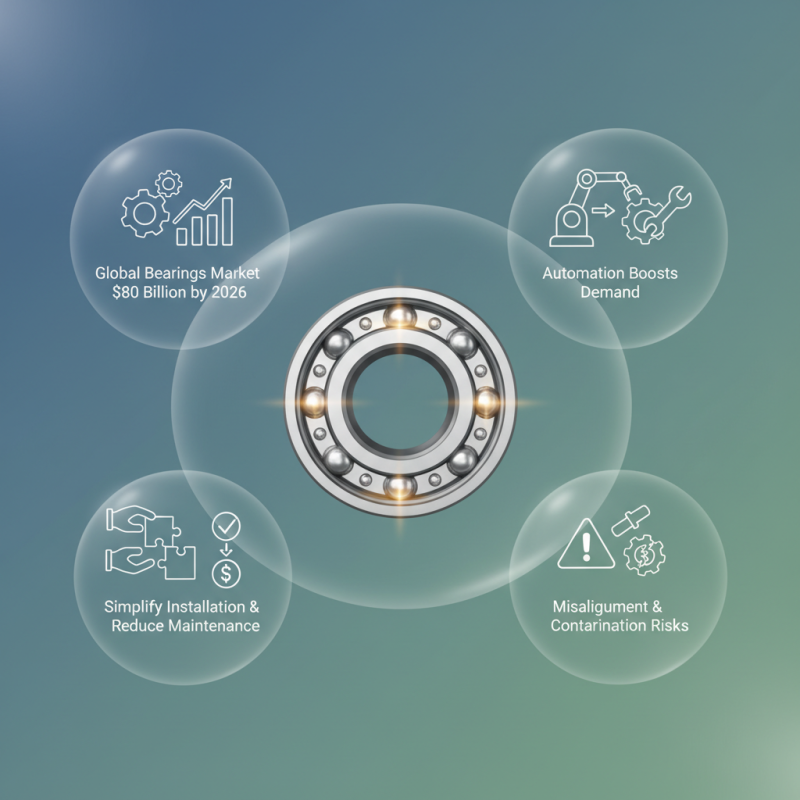
Insert Bearings play a crucial role in various mechanical systems. They provide support and stability for rotating shafts. The global bearings market is expected to reach $80 billion by 2026, illustrating their importance in diverse industries. Insert Bearings contribute significantly to this growth, thanks to their ability to simplify installation and reduce maintenance costs.
When discussing Insert Bearings, it is vital to understand their design and functionality. These components consist of a rolling element between inner and outer races. They help minimize friction and wear, enhancing the performance of machinery. A report from the International Federation of Robotics indicates that automation will boost the demand for such components. However, the reliability of Insert Bearings can be affected by factors like misalignment and contamination, which engineers must consider.
Recognizing the potential drawbacks of Insert Bearings is essential for effective application. Though they offer precise alignment, improper installation can lead to failure. Understanding their limitations allows for better integration into design. Companies that invest in quality can achieve improved operational efficiency. Balancing the benefits and challenges of Insert Bearings is vital for optimal performance in any application.
What is an Insert Bearing and Its Definition in Mechanical Engineering
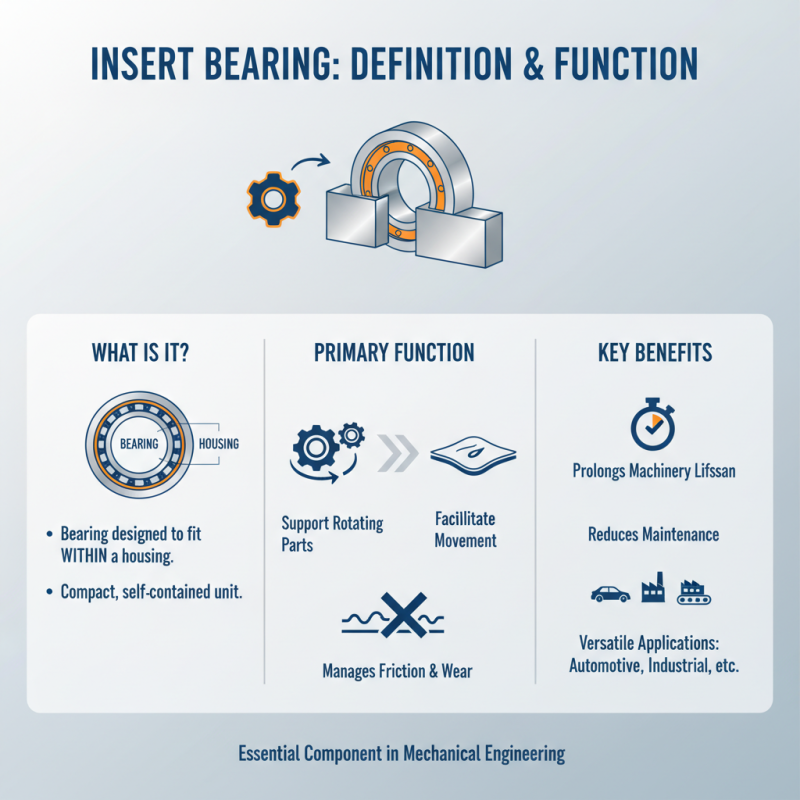
Insert bearings are essential components in mechanical engineering. They provide support and facilitate smooth movement between rotating parts. Defined simply, an insert bearing is a type of bearing designed to fit within a housing. These bearings manage friction and wear, prolonging the life of machinery. Their compact design makes them useful in various applications, from automotive to industrial machinery.
When installed, insert bearings can simplify assembly and maintenance. They are available in various materials, including metal and plastic. Each material offers unique benefits suited for different environments. However, users must consider compatibility with the surrounding components. While they are reliable, incorrect installation can lead to premature failure. The right fit is crucial for optimal performance. Engineers often rely on calculated dimensions to ensure an effective setup. In some cases, additional modifications may be required to achieve the perfect alignment. Understanding these nuances is vital for anyone working with insert bearings.
Types of Insert Bearings: A Comprehensive Overview of Common Variants
Insert bearings are crucial in various mechanical systems. They support rotating shafts, reducing friction and wear. Understanding the types of insert bearings can help in selecting the right one for a specific application.
There are several common types of insert bearings. The most widely used is the spherical insert bearing. This type allows for angular misalignment, enhancing performance in non-ideal conditions. Another variant is the flanged insert bearing, which features a flange for easy installation and stable positioning. It's favored in compact spaces where mounting flexibility is essential. Fixed insert bearings offer rigidity and are suitable for applications that require precise alignment.
Different materials also define insert bearings' effectiveness. For instance, steel bearings excel in high-load situations. However, they may rust in humid environments. Plastic insert bearings are lighter and resistant to corrosion but might wear out faster under heavy loads. Evaluating the specific requirements of your application will guide the best choice, balancing durability and performance. Always consider the trade-offs involved in each type.
Key Applications of Insert Bearings in Various Industries and Their Benefits
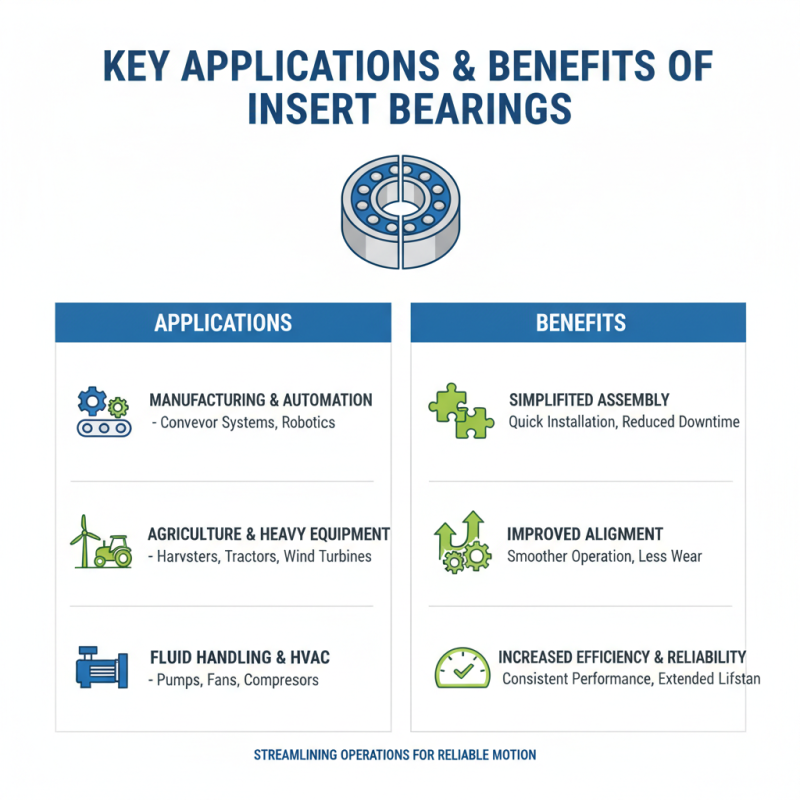
Insert bearings are widely used in various industries due to their ability to streamline operations. These components are essential in applications requiring reliable rotating or sliding motion. They simplify assembly and provide better alignment between machine parts, resulting in increased efficiency.
In manufacturing, insert bearings can be found in conveyor systems, reducing friction between moving parts. This helps improve the overall performance of the machinery. The benefits extend to the automotive sector as well. Here, they support rotating shafts, contributing to smoother handling and increased durability of vehicles.
Different industries also appreciate the ease of maintenance that insert bearings offer. They can be replaced quickly without disturbing surrounding components. However, neglecting proper lubrication can lead to premature failures. This highlights the importance of regular inspections and maintenance routines. Insert bearings have proven their value, but it's crucial to be aware of their limitations. Constant evaluation is necessary to ensure optimal performance in varied applications.
How Insert Bearings Function: Mechanics and Design Principles Explained
Insert bearings are crucial components in various machinery. They enable smooth rotation and support shafts securely. Understanding their mechanics is essential for proper application.
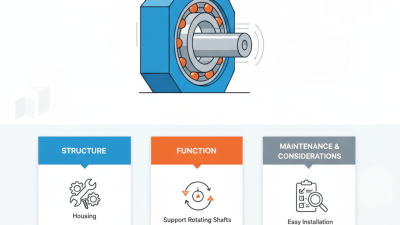
The design of insert bearings consists of an outer ring, inner ring, and ball or roller elements. These components work together to reduce friction and wear. The outer ring fits tightly into a housing, allowing the inner ring to rotate freely. This arrangement helps distribute loads effectively.
Each insert bearing design varies slightly for specific uses. For instance, some may feature a locking mechanism to prevent slippage. It's important to choose the right type depending on the application requirements. Sometimes, users overlook installation precision. A poor fit can lead to premature failure. Regular maintenance checks also play a significant role in ensuring longevity.
Industry Standards and Materials Used in the Production of Insert Bearings
When it comes to insert bearings, industry standards and materials play a crucial role in their production. Insert bearings are designed for high performance. Typically, they use a variety of materials including steel, thermoplastics, and ceramic components. According to a 2022 report by the International Society of Tribology, the selection of the right material significantly affects the bearing's resistance to wear and corrosion.
The most common material for insert bearings is high-carbon chromium steel, often treated for enhanced durability. This steel can effectively handle high load situations, making it ideal for heavy machinery. Furthermore, thermoplastic inserts are gaining popularity for their lightweight nature and resistance to chemicals. The IDG report highlights that nearly 30% of new designs now incorporate these innovative materials due to their cost efficiency and performance benefits.
Interestingly, choosing the right type of insert bearing is not always straightforward. Engineers must balance performance and cost, a challenge that often leads to compromises. Each industry may have its own specific requirements, making standardization more complex. The variety of applications—from agricultural machinery to automotive systems—requires ongoing research into material performance. The path forward should involve continuous evaluation to optimize performance and reliability.
Production Materials Used in Insert Bearings