How to Choose the Right Hardware Bearing for Your Project?
Choosing the right hardware bearing can significantly impact your project's success. A hardware bearing reduces friction, supports load, and ensures smooth movement. The right choice enhances equipment efficiency and longevity.
Several factors influence your decision. Consider the load type—static or dynamic. Assess the operating environment, including temperature and humidity. Different applications may require specific materials and designs. For instance, stainless steel bearings offer corrosion resistance, while plastic bearings can be lightweight and reduce noise.
Reflect on your project's unique needs. An inappropriate bearing choice can lead to premature wear or failure. This might cause downtime or costly repairs. Take time to evaluate options carefully. Making a hasty decision could harm your project in unexpected ways. Always be open to learning from feedback and past experiences.
Understanding the Basics of Hardware Bearings and Their Functions
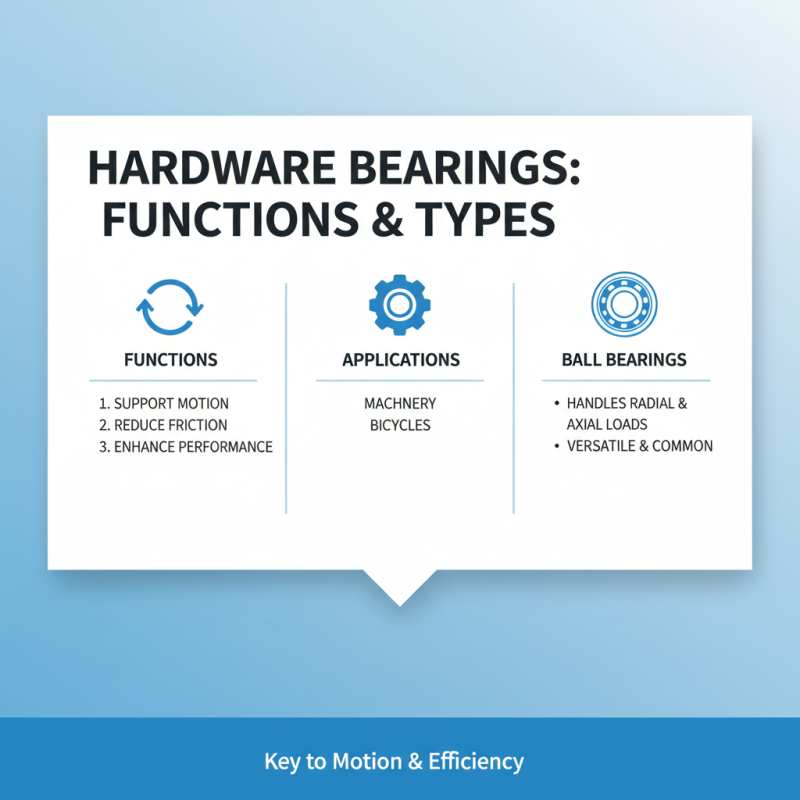
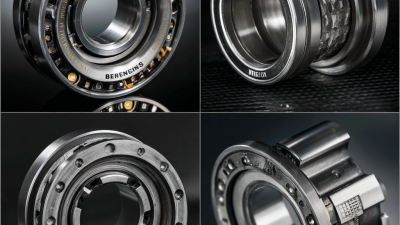
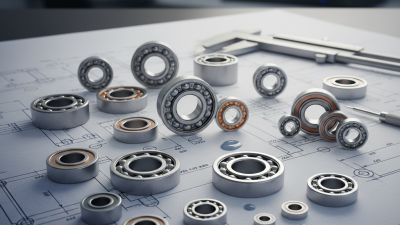
When selecting hardware bearings, understanding their functions is crucial. Bearings are designed to support motion, reduce friction, and enhance performance. They serve in various applications, from machinery to bicycles. Each type has unique characteristics that influence their effectiveness. For example, ball bearings handle radial and axial loads well. They are versatile and commonly found in everyday tools.
Another option is roller bearings. They provide better weight distribution and are often used in heavier machinery. Depending on your project, you might need thrust bearings. These bearings manage forces in specific directions. It's important to consider the operating conditions. Temperature and load capacity can change how long a bearing will last.
Sometimes, people overlook these details. They may choose a bearing based on price alone. This can lead to failures and costly repairs. It’s essential to match your bearing choice with the specific demands of your project. Factors like speed and environment matter greatly. Testing different types may reveal performance variances you didn't expect.
Identifying Project Requirements and Load Specifications
When embarking on a hardware project, defining load specifications is crucial. Loads can vary dramatically based on application. According to industry reports, around 30% of project failures stem from inadequate load calculations. Understanding whether the load is static, dynamic, or shock-related can guide you toward the right bearing type.
Consider axial and radial loads. Axial loads act along the bearing axis, while radial loads apply perpendicular pressure. Misjudging these can lead to premature failure. Data indicates that bearings under constant radial loads may require greater clearance, while those with significant axial loads need precision to avoid unnecessary wear.
Moreover, the working environment impacts load considerations. Factors like temperature, humidity, and contamination must not be overlooked. A dusty environment can increase friction. Proper seals and lubrication are essential. Neglecting these details can undermine performance and lead to costly downtime. Inappropriate material selection can also lead to unexpected failures. Regular analysis and adjustments are essential for long-term success.
Evaluating Different Types of Bearings Based on Application
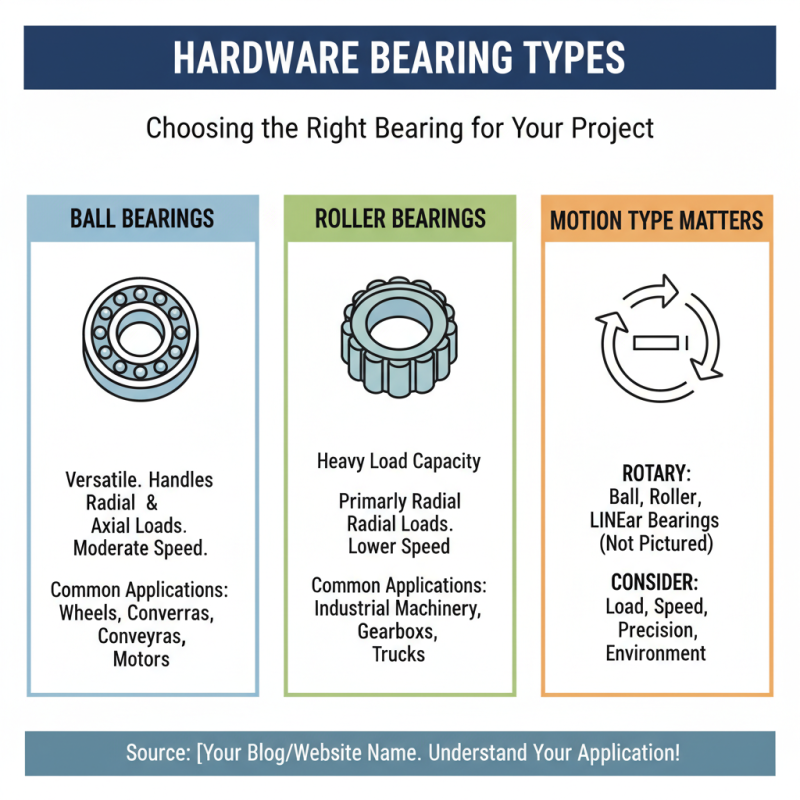
When choosing hardware bearings for your project, understanding their types is crucial. Different applications require specific characteristics. For instance, ball bearings are versatile and can handle radial and axial loads. Roller bearings are better for heavy loads but have limited speed capabilities. Consider the type of motion your project will require.
Tips: Always assess the environment where the bearing will operate. Temperature, humidity, and contamination can affect performance. In challenging conditions, sealed bearings may be necessary.
Some applications demand precision. High-speed machines benefit from angular contact bearings. They provide stability and minimize vibration. However, they often come at a higher cost. Evaluate your budget against performance needs.
Tips: Don't overlook lubrication needs. Some bearings are pre-lubricated, while others require regular maintenance. Using the wrong lubricant can reduce lifespan. It's a detail worth monitoring in your planning. Remember, the right choice is often about balance. Consider all factors before finalizing your decision.
Considering Material Options for Durability and Performance
When selecting hardware bearings, the choice of material is crucial. Different materials offer various levels of durability and performance. For example, stainless steel bearings excel in corrosion resistance. This makes them ideal for harsh environments. However, they can be heavier and more expensive.
Plastic bearings, on the other hand, are lightweight and resistant to chemicals. They work well in low-load applications. But they may wear out faster compared to metal options. It is important to analyze the specific requirements of your project. Think about the environment the bearing will be in.
Sometimes, the most durable choice may not be the best. Certain projects need flexibility and responsiveness. A balance between strength and weight is key. Consider how different materials might perform over time. Take note of potential trade-offs in your decision-making process. Reflect on your project's unique demands before committing to a choice.
Material Options for Hardware Bearings: Durability and Performance Comparison
Assessing Cost, Availability, and Technical Support for Bearings
When selecting hardware bearings, cost, availability, and technical support play critical roles. According to a recent industry report, up to 30% of project budgets can go towards components like bearings. Manufacturers often face challenges in sourcing the right type at an affordable price. This cost can affect project timelines and overall performance.
Availability of materials is another crucial element. Delays in supply chains may lead to schedule overruns. In 2022, around 25% of companies reported significant disruptions in sourcing critical components, primarily due to global economic conditions. It’s essential to evaluate stock levels and lead times before making a decision.
Technical support should also be a priority. A lack of expert assistance can lead to misapplication or improper installation. Research indicated that projects lacking adequate support had a higher failure rate, nearly 40% more compared to those with reliable guidance. This highlights the need for thorough technical resources during the selection phase. Balancing these factors can be quite complex, often requiring deeper insights and flexibility.
How to Choose the Right Hardware Bearing for Your Project?
| Bearing Type |
Cost (USD) |
Availability |
Technical Support |
| Ball Bearing |
25 - 100 |
Widely Available |
Online & Phone Support |
| Roller Bearing |
40 - 150 |
Readily Available |
Technical Support Available |
| Thrust Bearing |
50 - 200 |
Moderately Available |
Email Support |
| Self-Aligning Bearing |
30 - 120 |
Available |
Limited Support |
| Magnetic Bearing |
200 - 1000 |
Special Order |
Expert Technical Support |