Choosing a reliable Linqing Bearing supplier in 2026 takes more than comparing prices or browsing a polished catalog. Buyers need to check whether a supplier understands the bearing’s actual working conditions: load, rotation speed, temperature, fit, and expected service life. A small mismatch in bore size or clearance can cause noise, vibration, or early wear. Details matter.
Start with the application. Ask for clear product specifications, material information, dimensional tolerances, and inspection records relevant to the bearing type. If a supplier offers samples, compare them with your drawings and test them under realistic conditions where possible. Certificates can support a supplier’s claims, but they do not replace direct verification. A tidy document may still leave questions unanswered.
Communication offers another useful signal. Notice how quickly the supplier responds, whether answers address your technical questions, and whether production and delivery estimates are explained clearly. Discuss packaging, batch identification, and how defects or specification changes are handled before placing a large order. That takes time. It can prevent avoidable surprises.
There is no single checklist that guarantees a perfect sourcing decision. Product quality can vary between batches, and even a capable supplier may not suit every application or order size. Compare several Linqing Bearing suppliers using the same requirements, then record what remains uncertain. A practical decision balances evidence, cost, consistency, and support—not promises alone. A second opinion may help. The right questions, asked early, often reveal more than a low quote.
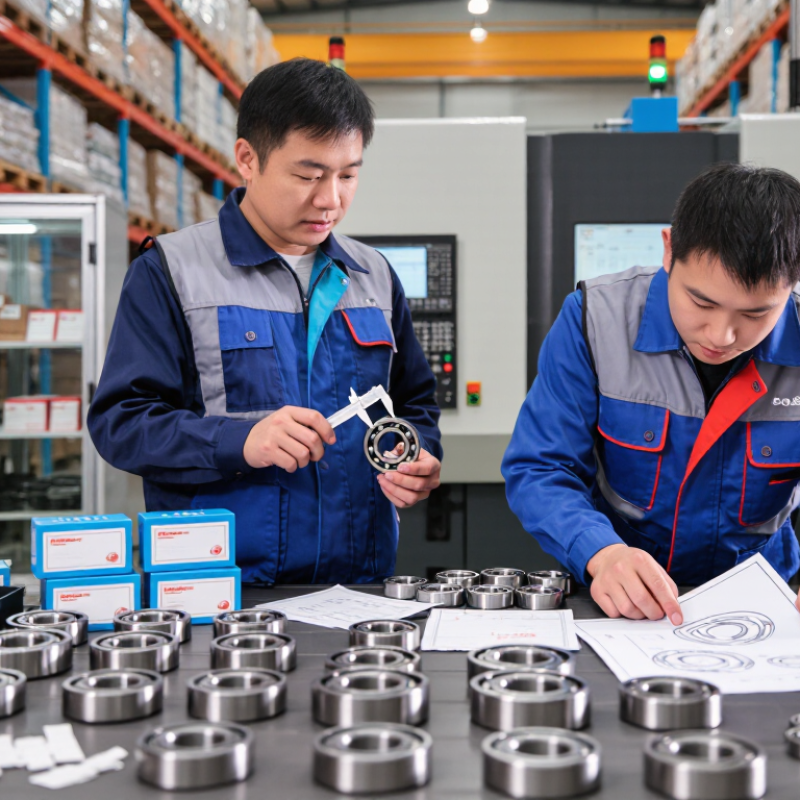
Before comparing a Linqing bearing supplier, define the job the bearing must do. A bearing selected by bore size alone can fit the shaft and still fail early. Record the shaft and housing dimensions, load direction, speed, operating temperature, and expected service hours. Small details matter.
Describe the actual operating environment, not just the machine name. Is there fine dust near a conveyor, water splash around a pump, or repeated shock from a press? Note the lubrication method, relubrication intervals, mounting space, and whether the shaft runs continuously or starts and stops. These conditions help narrow the bearing type, clearance, seal arrangement, and material requirements. If measurements are estimates, mark them clearly. Suppliers need honest inputs, not polished guesses.
In supplier discussions, share a simple duty sheet and a photo of the mounting position, with dimensions marked. Ask which assumptions drive the recommendation and what information remains uncertain. Request relevant inspection records and check tolerances against your drawing. A useful answer should connect specifications to your application, not offer a universal solution. I still find teams can overlook maintenance access. It is easy to miss. A technically suitable bearing may be difficult to lubricate or replace in the real assembly, so include service access in your requirements.
For a reliable Linqing bearing supplier in 2026, verify the company behind the quotation. Request its business registration, factory address, years of operation, and export references, then check that the names and addresses match across documents. Ask for a live video tour or an independent factory audit. Look for actual production and inspection areas, not only a showroom. Records matter. ISO’s 2022 Survey reported about 1.26 million valid ISO 9001 certificates worldwide. That figure shows how widely quality systems are certified, but a certificate alone does not prove bearing-making expertise. Confirm its scope, issuing body, and validity, and ask how the supplier handles nonconforming parts.
Manufacturing capacity should be visible in practical evidence. Request a current equipment list, monthly output by bearing type, lead times, and recent inspection records. During a factory visit, note whether grinding machines, heat-treatment controls, and measuring equipment are operating and maintained. Ask to see calibration records and a sample inspection report showing dimensions, hardness, and noise or vibration checks where relevant. Capacity is physical. Compare the stated output with the number of machines, shifts, and workers; the numbers should make sense. A supplier may have limited capacity during peak season, and that detail is easy to miss. Request a small trial order and agree on measurable acceptance criteria before placing a larger one.
Verify the supplier’s identity, experience, and manufacturing capacity using documentary evidence—not claims alone.
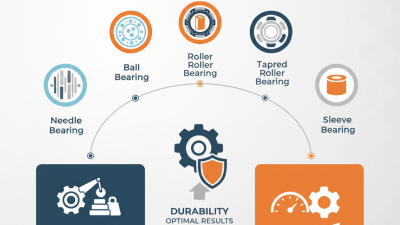
How to read this chart: The values count suggested checks in a practical due-diligence checklist; they are not market statistics or ratings of any supplier. Confirm business registration and operating status, request verifiable experience records, and assess equipment, quality controls, and documented production capacity.
Choosing a reliable Linqing bearing supplier in 2026 starts with evidence, not polished product photos. Ask which steel grade is used for the rings and rolling elements, and request a material certificate linked to the production batch. Check heat-treatment records, hardness results, and whether the stated clearance and tolerance fit your operating conditions. A bearing can look spotless and still fail early.
Inspect sample markings, packaging, raceway finish, and rolling-element consistency under good light. For critical orders, ask how dimensions, runout, noise, and vibration are measured, and whether the instruments are calibrated. Request the inspection plan and recent reports, not only a verbal promise. Small detail. A micrometer reading without calibration history is weak evidence.
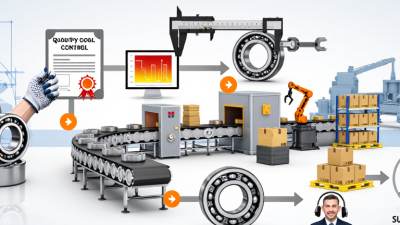
Supplier audits can show whether incoming steel, machining, cleaning, and final inspection are controlled at each stage. Confirm lot traceability and ask how nonconforming parts are isolated. If possible, compare samples with an independent laboratory or your own receiving checks. This adds cost and time. Not always easy. One sample cannot prove every shipment will match, so write acceptance criteria and review early batches closely.
| Assessment Area | What to Verify | Suitable Evidence or Inspection | Acceptance Guidance | Warning Signs |
|---|---|---|---|---|
| Product specification | Confirm bearing type, dimensions, internal clearance, tolerance class, cage, seals, and lubrication requirements against the intended application. | Approved drawing, purchase specification, product datasheet, and a pre-production sample where appropriate. | All product details should match the agreed drawing and applicable bearing standards, such as ISO 492 for dimensional and rotational accuracy. | Quotation or sample uses a similar-looking part without clearly confirming the full designation and required tolerances. |
| Steel grade and material traceability | Check the specified bearing steel and verify that rings and rolling elements can be traced to their material and production lots. | Material certificate linked to the production lot; review chemical composition records and, when needed, conduct independent material analysis. | Material grade and chemistry should meet the agreed specification. Any claimed equivalent grade should be reviewed and approved rather than assumed interchangeable. | Generic material statements, missing lot references, or certificates that cannot be linked to the supplied goods. |
| Heat treatment and hardness | Assess whether the specified heat treatment is appropriate for the bearing design and operating conditions. | Heat-treatment records and hardness testing on representative parts using an appropriate, calibrated method. | Compare results with the drawing or agreed specification. Through-hardened bearing components commonly have hardness around 60–64 HRC, but requirements vary by design and material. | A single generic hardness value is offered for every bearing, with no test record or explanation of the applicable specification. |
| Dimensions and tolerances | Inspect bore, outside diameter, width, and any specified chamfers or features. | Calibrated micrometers, gauges, or suitable measuring equipment; retained inspection records tied to the product lot. | Measured results should fall within the tolerances stated in the drawing or applicable tolerance class. | Measurements are reported without instrument details, calibration status, sample identification, or tolerance limits. |
| Clearance, runout, and rotation | Verify radial or axial internal clearance, runout, and smooth rotation where these characteristics are specified. | Appropriate clearance and runout gauges, plus documented functional checks on representative samples. | Use the product-specific limits; clearance groups and permitted runout depend on bearing type, size, and application. | Only a hand-spin demonstration is provided as proof of dimensional accuracy or operating performance. |
| Surface condition and workmanship | Look for corrosion, cracks, dents, burrs, grinding damage, contamination, and visible irregularities on raceways and rolling elements. | Visual inspection under suitable lighting and, where risk warrants, additional non-destructive examination using an agreed procedure. | Surfaces should meet the drawing, finish, and cleanliness requirements. Use ISO 15243 terminology when documenting bearing damage or failure modes. | Visible defects are dismissed without a documented disposition or corrective action. |
| Inspection system and sampling | Review incoming, in-process, and final inspection controls, including how nonconforming products are identified and contained. | Inspection plan, sample records, calibration records, nonconformance reports, and corrective-action examples. | Sampling frequency and acceptance criteria should be agreed in advance; an agreed sampling plan may reference ISO 2859-1 where applicable. | Inspection is described as “100%” or “strict” without records, defined criteria, or evidence of measurement capability. |
| Quality management and consistency | Check whether the supplier’s quality controls cover the processes relevant to the ordered bearing and whether production is consistent across lots. | Current quality-management documentation, process-control records, audit findings, and results from multiple production lots. | Evaluate the scope and validity of any certification, such as ISO 9001, alongside actual product inspection evidence. | A certificate is presented as a substitute for bearing-specific test results or lot-level traceability. |
| Packaging, preservation, and labeling | Ensure bearings are protected from moisture, dust, impact, and handling damage during storage and transport. | Review packaging samples, preservation instructions, and labels showing the agreed product designation and batch or lot reference. | Packaging should suit the transport route and storage conditions and keep product identification traceable through delivery. | Unlabeled products, damaged packaging, or mixed lots without clear separation and identification. |
| Supplier evaluation and order controls | Confirm production capability, subcontracted processes, change control, delivery terms, and the process for handling claims. | Process-flow details, written change-notification terms, pre-shipment inspection options, and a documented corrective-action process. | Agree on specifications, inspection records, acceptance criteria, and resolution procedures before placing a production order. | Unannounced material or process changes, unclear responsibility for outsourced steps, or refusal to document agreed requirements. |
A reliable Linqing bearing supplier should make its quotation easy to compare, not merely offer the lowest unit price. Check that the quote specifies bearing type, dimensions, tolerance class, materials, packaging, and quantity. Ask whether prices include export packing, inspection, and inland transport. Small omissions matter. A low price can become expensive when fees appear later.
Compare delivery terms in writing. Confirm production lead time, dispatch date, shipping method, and who handles each transport stage. Ask how delays are reported and whether partial shipments are possible. For a time-sensitive order, request a realistic schedule rather than a best-case promise. After-sales support deserves equal attention. Find out how quickly the supplier answers technical questions, what documents support a quality claim, and whether each batch can be traced by its production or inspection records. Keep emails, sample reports, and agreed specifications together. No checklist catches everything; a vague answer may have a reasonable explanation, but it should be clarified before payment. A short, specific response is often more useful than a polished sales promise.
Before ordering from a Linqing bearing supplier, verify documents against the exact bearing series and production batch. Request material certificates, heat-treatment records, dimensional inspection results, and traceability from raw stock to packed goods.
Check that the supplier’s quality certificate is valid with its issuing body, and confirm its stated scope covers the relevant manufacturing site. ISO 9001:2015 sets requirements for a quality management system, but certification alone does not prove every bearing meets your drawing. Ask for recent, batch-specific inspection evidence.
Use technical data to assess claims. ISO 281:2007 defines the basic L10 rating life at 90% reliability under stated operating conditions. Ask the supplier to disclose load, speed, lubrication, and contamination assumptions behind any life estimate.
A polished test sheet can still hide a mismatch. Compare sample dimensions and markings with your specification, then arrange an independent inspection for higher-risk orders.
Check how complaints are logged, how nonconforming parts are isolated, and whether corrective actions include dates and verification.
One awkward detail matters: does the supplier give the same clear answer when a shipment is delayed? Keep approved samples and written acceptance criteria before production starts.